

Most marketing teams heading into 2027 have access to the same AI models and tools, and nearly every company now says it’s using AI. The difference next year will come from how teams are set up to use it.
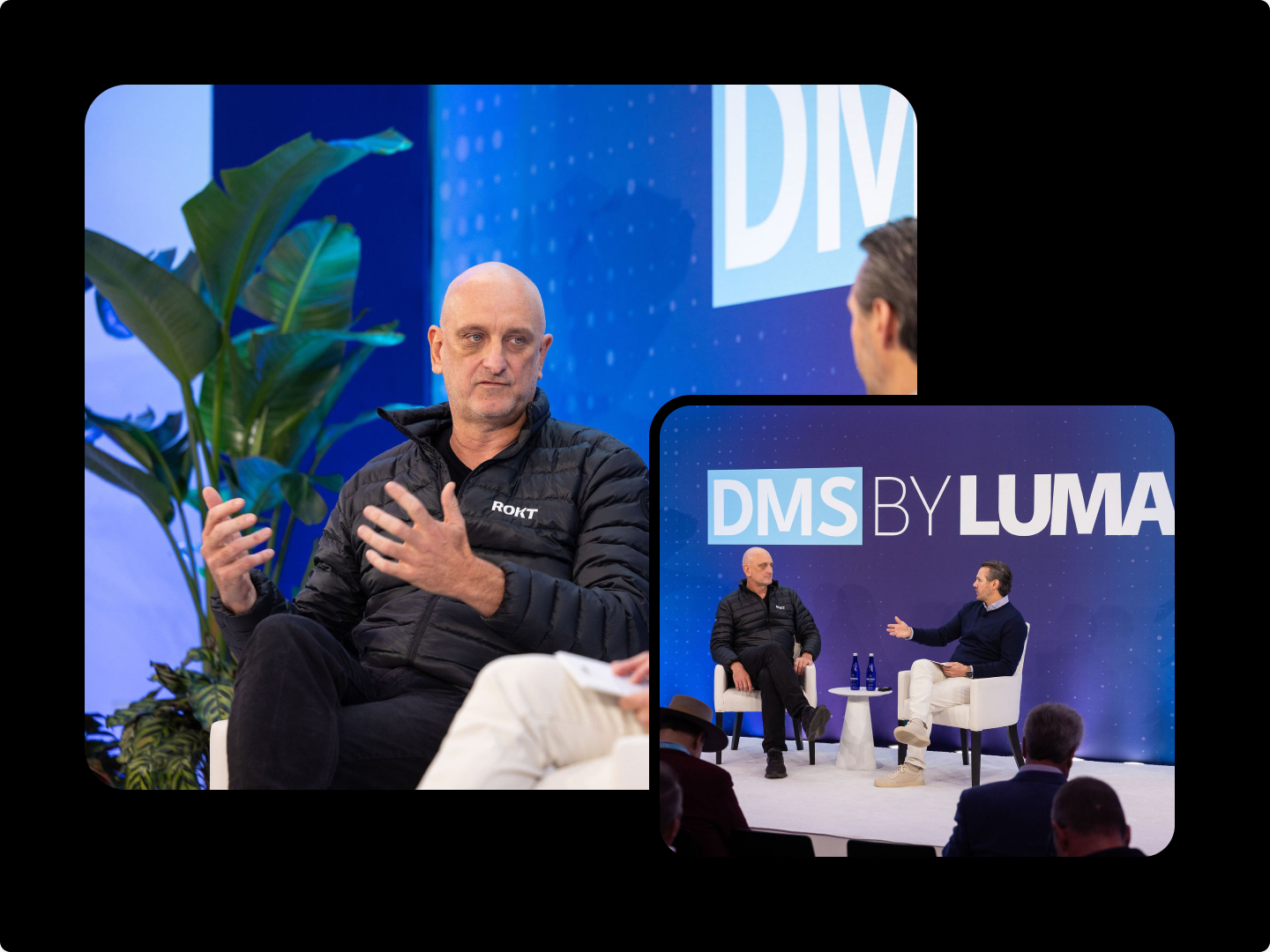
That idea ran through two conversations Rokt leaders had at DMS by LUMA in New York this month. Bruce Buchanan, CEO, sat down after his Centerstage conversation, and Craig Galvin, Chief Revenue Officer, after the Commerce Media Exchange. Bruce focused on how the business itself needs to change. Craig focused on what will set companies apart once everyone has the same tools.
Bruce Buchanan on rethinking how teams work
Explore the full transcript
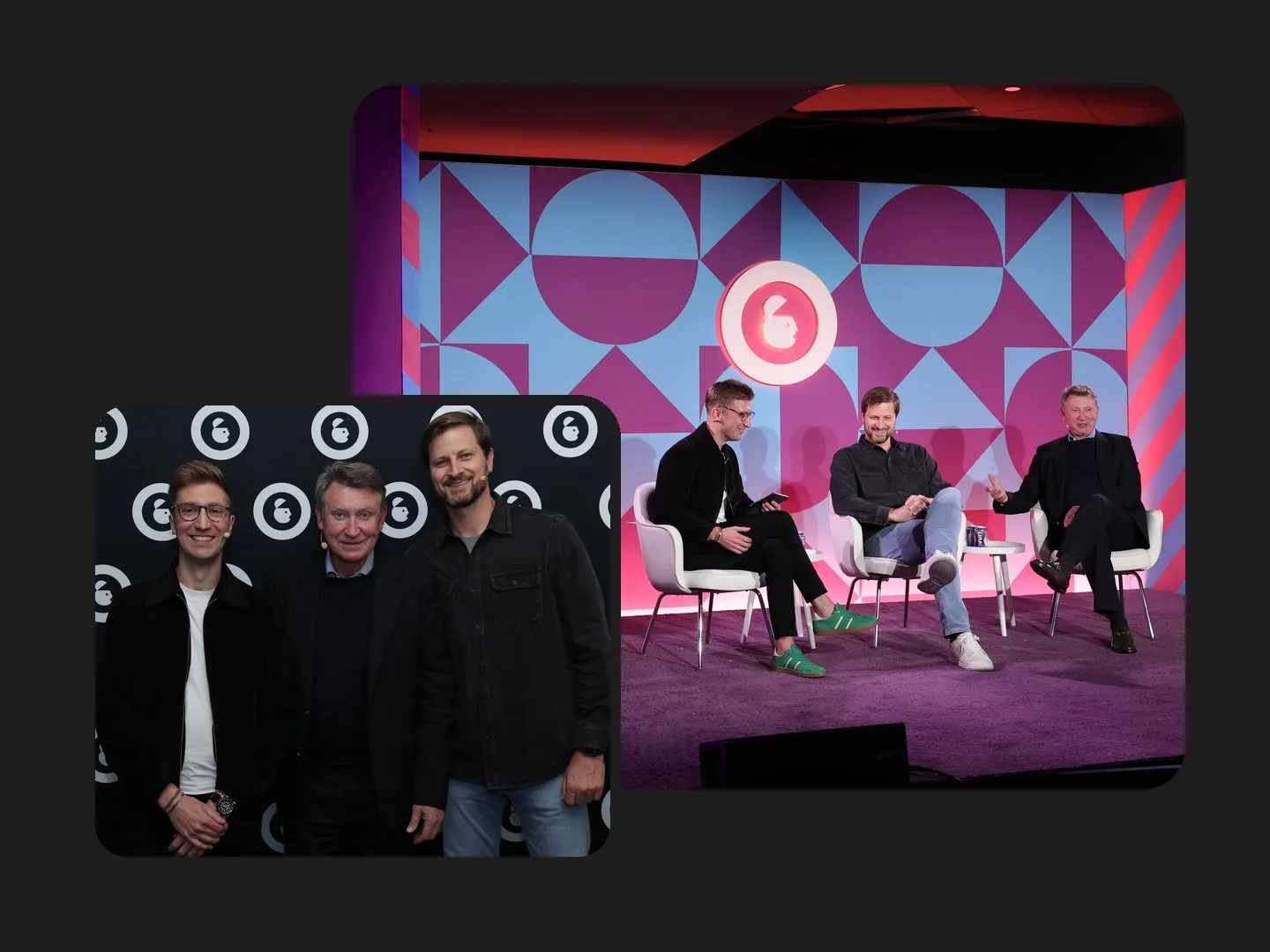
Bruce Buchanan, CEO and co-founder of Rokt, in conversation with DMS by LUMA for the Looking Forward series.
DMS by LUMA
This is DMS Looking Forward. The questions stay the same. Each leader’s perspective makes the difference. You just got off the Centerstage with Conor, and I know things can move pretty fast up there. If there’s one takeaway you’d like the audience to have from that conversation, what would it be?
Bruce Buchanan
I think the message about speed is probably the most important thing. We’re going through such a rapid pace of change at the moment, and businesses need to be prepared for the change that’s about to come. It’s very hard to predict what’s about to happen, but those that can move fast will reap the rewards. So the one message I’d take out of what we talked about on stage is speed, and the importance of moving quickly.
DMS by LUMA
I like that. It actually leads me into my next question, because we’re about to move into 2027. Looking forward, what new developments do you believe will help marketers streamline their strategies with their consumers?
Bruce Buchanan
If we’re looking at speed, I think the data silos and the tool silos are going to break down super fast now. The intelligence of the models and the tools we’ve got at our fingertips today is mind-blowing in terms of how fast you can move and the questions you can answer.
I think that’ll quickly move into what I call self-improving loops. You’ll go from a world where I ask a question and execute on the cycle time of a monthly budget or a monthly campaign, to a system where I’m constantly chasing improvements and able to fine-tune. All these silos that used to exist on the periphery will come together and give me real insight into what’s going on.
DMS by LUMA
And with that speed, I’m assuming AI will play a part.
Bruce Buchanan
AI is going to play a massive part, but you’re also going to need to work with partners that can support that speed. The channels that can support speed, combined with the tools you’ve got at your fingertips, will be the key thing that lets you actually shift the dial.
DMS by LUMA
Let’s combine two points. With speed, consumers are looking for efficiency and transparency. But if a lot of companies are claiming they already have those components, where is the competitive edge? Where can a company find its niche?
Bruce Buchanan
I think very few people actually have the speed that will really unlock the game at the moment. What I see is most people using the same process and the same organizational structure. It’s what I call the faster horse moment. They’re all making the horse move faster, but they haven’t redesigned and built the factory or the car yet.
The real opportunity is how you redesign the organization to be the factory of the future that lets you move orders of magnitude faster. How do you take humans out of a lot of the steps that create friction on speed, and give people a much broader remit and responsibility, so they’re solving the higher-level problems across all the silos? That’s when you get the 10x, 15x, 20x improvements in speed.
Productivity and the faster horse get you a 10, 20, 30, 40, 50% gain. To get to the 10x or 20x gain, you’ve really got to redesign how the business looks. If you can move 20 or 50 times faster than your competitors, and very few people are doing it, that’s where the competitive advantage will come from.
DMS by LUMA
I like that answer. Something you said earlier was about outcomes. Marketers are looking for that, but the conversation is also pivoting toward decision-making capabilities. With the community working together, where do you think we could improve to speed up decision-making?
Bruce Buchanan
I think the silos that existed in adtech, martech and commerce are all breaking down. They’re getting merged together. Your martech stack, your adtech stack and your commerce stack all used to be three very different silos. AI is allowing them to be flattened and merged together in a way that’s never been seen before.
That gets rid of the silos and the friction points between each of them, but more importantly, it gives you speed and decision-making capabilities you haven’t had before. What’s happening in my ad stack in terms of what consumers are responding to, what I’m seeing working, what’s being talked about. What consumers are doing on my website, what they’re buying, how they’re transacting, and how I get cart abandonment back into advertising in a much more dynamic way.
Rather than siloed teams and siloed tech, that becomes an opportunity for those smart enough to bridge them together, where you’re no longer thinking from a siloed or functional specialism. You’ll start to think about outcomes. How do I make sure my conversion rate and my consumer experience go up, irrespective of what channel I’m actually executing on?
DMS by LUMA
I agree with that. I love that. I have an easy one for you. Before we started, we noted that you’ve been coming to DMS for many years, and the relationship has been long and healthy, so thank you. Why do you come to DMS?
Bruce Buchanan
We’ve been coming to DMS for, I think, over 10 years. We originally started coming to the New York one, doing a lot of talks and panels. Then there was DMS West, the martech one, which we first sponsored six or seven years ago. I can’t even remember.
DMS by LUMA
Yes. That’s when I first met you.
Bruce Buchanan
That was a long time ago. What’s been great is these communities that bring together people who are at the coalface of these problems. Generally, you don’t talk to people across the industry like this. The conversation I had here with OpenAI, Netflix and Google isn’t the sort of conversation we have every day. Typically, for me, it’s with my ecommerce partners. So having a forum where we can share notes and think about what other people are working on is wonderful. We’ve gotten a lot of value out of it over the years, and we want to continue to support it. It’s great to see it still flourishing.
DMS by LUMA
Thank you so much. I hope you have a great day, and thank you for joining us for DMS Looking Forward.
Bruce Buchanan
Thank you.
Transcript lightly edited for clarity.
Bruce’s starting point is the pace of change. It’s hard to predict what’s coming, he said, but the businesses that can move fast will reap the rewards. The harder question for marketing leaders is how to build an organization that can.
Productivity alone won’t be enough
Most companies, in his view, use the same processes and organizational structure and are simply trying to run them faster. “They’re all making the horse move faster. But they haven’t redesigned and built the factory or the car yet,” he said.
Productivity gains of that kind might add 10% to 50%. Bruce believes the 10x and 20x gains come from redesigning how the business works, removing steps that create friction, and giving people a broader remit to solve higher-level problems across teams. Very few companies are doing this today. A business that can move 20 or 50 times faster than its competitors, he said, is where the competitive advantage will come from.
A redesigned organization also plans differently. Bruce expects data silos and tool silos to break down quickly because today’s AI models and tools let teams answer almost any question and move fast. He sees teams shifting from working on the cycle of a monthly budget or campaign to what he calls self-improving loops, where they constantly chase improvements and fine-tune as they go.
AI will play a massive part in that shift, he said. Marketers will also need partners and channels that can keep pace.
Plan around outcomes, whatever the channel
The same thinking applies to the marketing stack. Adtech, martech, and commerce used to be three separate stacks, and Bruce sees AI flattening them together in a way the industry hasn’t seen before. That lets brands connect what’s working in their ads and what people are talking about with what consumers do on their website, what they buy, and how they transact. It also means bringing signals like cart abandonment back into advertising more dynamically.
Teams that bridge those systems will stop thinking in functional silos and start thinking in outcomes. “How do I make sure my conversion rate and my consumer experience go up, irrespective of what channel I’m actually executing on?” he said.
Once success is measured by outcomes across channels, the end customer becomes the reference point for every decision. That’s where Craig started.
Craig Galvin on what sets companies apart in 2027
Explore the full transcript
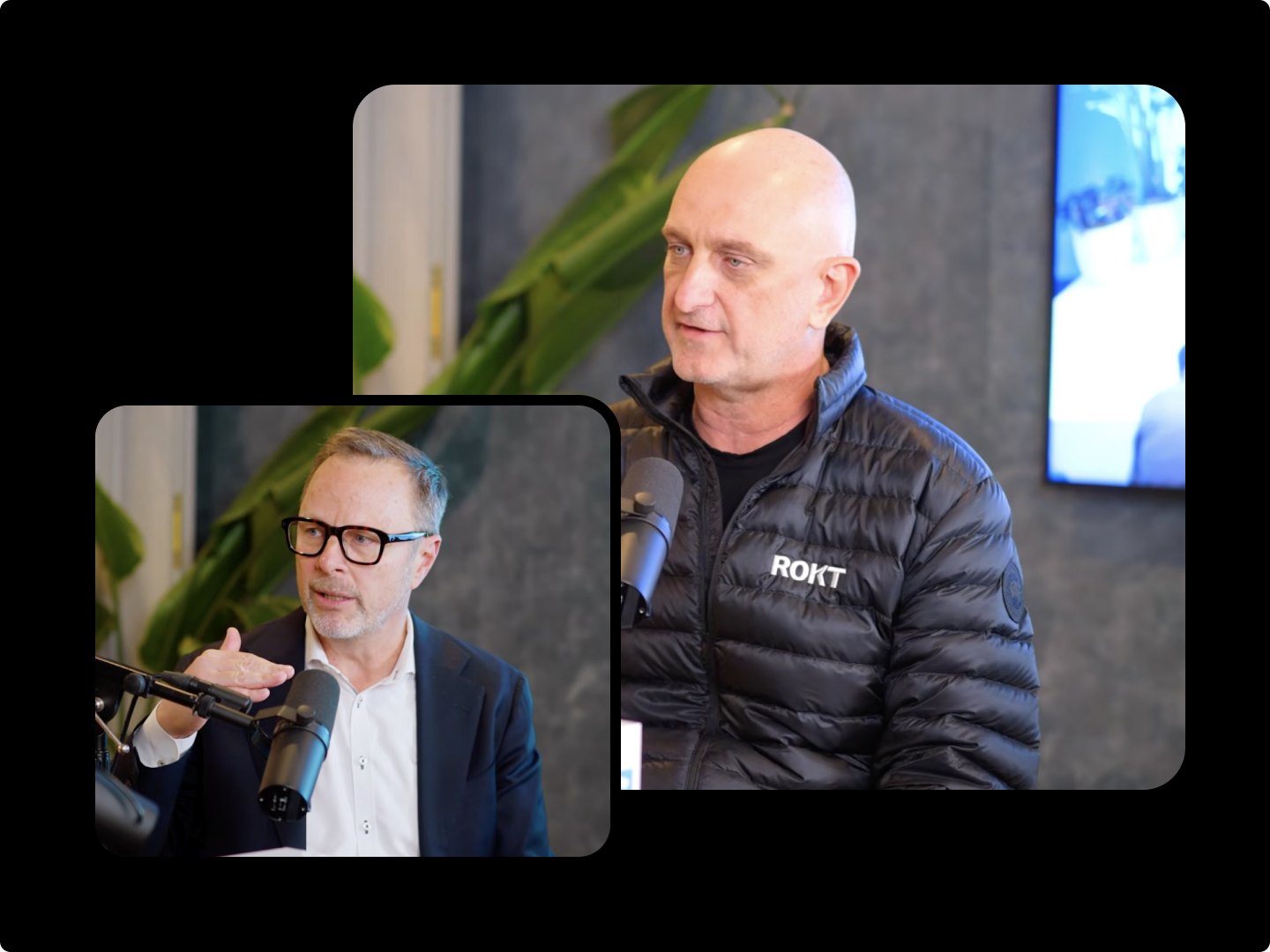
Craig Galvin, Chief Revenue Officer at Rokt, in conversation with DMS by LUMA for the Looking Forward series.
DMS by LUMA
This is DMS Looking Forward. The questions stay the same. Each leader’s perspective makes the difference. Thank you for joining us.
Craig Galvin
Nice to meet you.
DMS by LUMA
You just came from the Commerce Media Exchange. I know it’s Chatham House rules, so you can’t go into too much detail, but I heard the sessions were pretty interesting this year. Can you share one thing that really got you thinking?
Craig Galvin
I think commerce media is at a bit of an inflection point. How large can it become? There are a lot of conversations around the digital experience and the physical experience, and how you merge the two. How do you put the customer at the forefront of your thinking, the end customer who’s about to purchase a particular product, and make sure we’re always thinking about how to provide the best possible experience for that individual?
DMS by LUMA
I love that. It’s so important to think about the brands and the consumer at the end of the day, especially as we move into 2027.
Craig Galvin
Yes, the whole cycle starts all over again.
DMS by LUMA
And more importantly, formulating your strategies and the best approaches. Looking forward, what trends do you think will have the strongest impact, and how should we help marketers evaluate them as they build out their strategies?
Craig Galvin
As we move into 2027, if I’m a marketer, I’m looking at any number of different metrics to determine success and the allocation of dollars. We have to be better as an industry at making it as easy as possible for them to spend their dollars, and not just spend them, but really lean into what that performance looks like and what the long-term value of a particular campaign is. As an organization, we’re definitely leaning into how we can facilitate those conversations.
One of the things we at Rokt definitely feel is that the speed of change is only going to accelerate. It’s not going to slow down. I think 2026 is the realization of how quickly things are going to move. You have to establish the foundation as you move into 2027 and be ready for a risk-on environment, ready to really experiment and lean into what experimentation can be. Don’t go in with preconceived ideas. Be really flexible and malleable in what you can do.
DMS by LUMA
I like the experimental part. The partnerships you build will be very important for brands and marketers, especially as they focus on outcomes and become more driven by decision-making. Where do you see opportunities to build partnerships that help marketers and brands make better decisions?
Craig Galvin
We’re very fortunate in the number of partners we have across many industry verticals, and even within verticals, a very deep level of partners. So we automatically bring this depth of experience to the table, and that’s not just retailers. That’s ticketing, that’s movies, that’s financial services. There’s a whole opportunity we’re already creating, bringing a comprehensive audience view to those decision makers. We’re going to do more of that, and I think as an industry we can do more of that. I’m looking forward to continuing that into 2027.
DMS by LUMA
AI is getting pretty interesting. A large part of what companies are trying to show is efficiency, transparency and trust, which a lot of brands look for when they use AI. If everybody’s saying the same thing, that they have the AI and they’re using it, where’s the competitive edge?
Craig Galvin
It’s a really great question. To my point earlier, AI is table stakes, then it’s implementation and execution, and then it becomes the human thinking that sits over and above that. What are you bringing to the table beyond the executional level that AI brings? The intuition, the thoughtfulness. How do you have those conversations with partners in real time? How do you spend more time with partners in person to understand creativity and innovation as they play out in AI?
I do think that’s an element that can always provide an opportunity for differentiation. How clever you are in coming up with solutions that otherwise wouldn’t be there. That’s being ingenious and being creative.
DMS by LUMA
I love that. This is the easy one. This is your first DMS, correct? You just had your Exchange session, but you’ve had a chance to see who’s here. What’s your first impression of DMS?
Craig Galvin
My first impression is that it’s unlike anything I’ve been to before, with opinions coming from the floor as well as the panel. It’s a robust conversation about topics that are really present right now, that people are trying to understand and solve for. And because it’s Chatham House rules, it can be a very open, honest, vulnerable conversation. That’s unique, and it gets to a better outcome quicker.
DMS by LUMA
It’s definitely something we were driving for this year, the collective conversation. We really believe it takes everybody here working together to make our industry better. Thank you so much for your time. Very nice meeting you.
Craig Galvin
Thanks.
Transcript lightly edited for clarity.
Put the customer first, then experiment
Craig came out of the Commerce Media Exchange describing commerce media as at an inflection point, with open questions about how large it can become. Many of the conversations there were about how to bring digital and physical experiences together while keeping the end customer, the person about to buy, at the forefront of every decision.
For marketers, putting the customer first has to show up in how they spend. Craig wants the industry to make it as easy as possible for marketers to decide where their dollars go and to show a campaign’s long-term value alongside its performance. He said Rokt is leaning into helping facilitate those conversations.
Like Bruce, he expects the pace to keep rising. “The speed of change is only going to accelerate. It’s not going to slow down,” he said. He sees 2026 as the year the industry realized how quickly things will move, and 2027 as the year to build on that foundation with a risk-on mindset. That means being ready to experiment and staying flexible, without going in with preconceived ideas.
Human thinking is the edge once AI is table stakes
Experimenting well depends on who you’re working with. Craig pointed to the depth of Rokt’s partnerships across industry verticals, from retail and ticketing to movies and financial services, as a way to give decision makers a comprehensive view of their audience. He expects the industry to do more of that in 2027.
With every company now saying it uses AI, Craig sees AI as table stakes, followed by implementation and execution. What sets a company apart is the human thinking above that, including intuition, thoughtfulness, and how a team works with partners, both in real-time conversations and in person. Being ingenious and being creative, he said, is what will always leave room for differentiation.
Bruce’s faster horse and Craig’s human edge describe the same work for 2027. Everyone will have the tools, so the advantage will come from how teams are organized around outcomes and how much room they give people to bring the thinking AI can’t.
Watch more from LUMA’s Looking Forward series on YouTube. Quotes have been lightly edited for clarity.