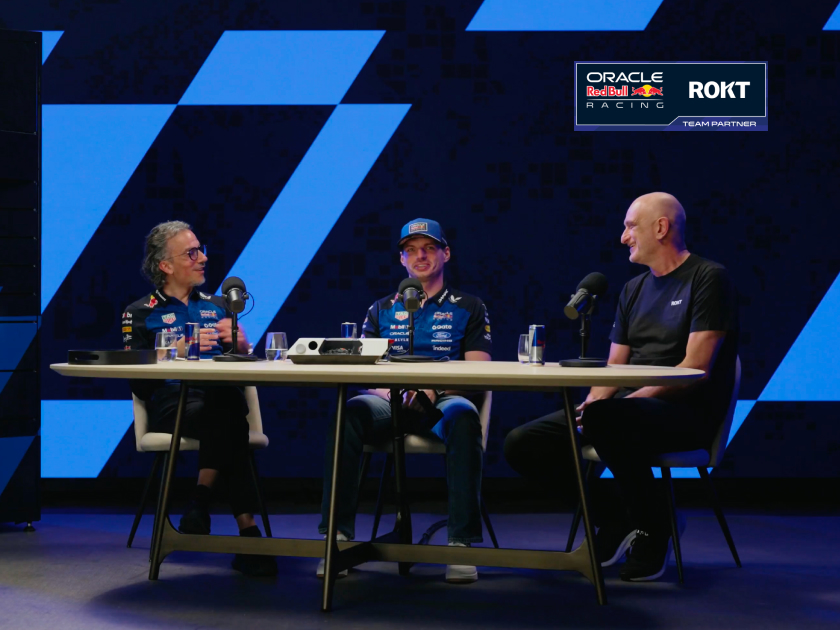


If you’ve ever tried to explain what you do to your family, you’ll appreciate Bruce Buchanan’s benchmark: it finally clicked for his kids when they saw the Rokt logo on an F1 car, and then again on a Lego set.
In The Australian Financial Review’s How I Made It podcast, Rokt CEO Bruce Buchanan shares the story behind that moment and the journey that led there. It’s an honest look at what it takes to build: early adversity, a bias for action, learning through failure, and staying focused through the years when growth doesn’t feel linear.
Below are the themes Bruce unpacks in the episode, and why they matter for anyone building in high-stakes, high-change markets.
A builder’s start
Bruce grew up across Australia, the UK, and the US, before settling on the NSW Central Coast. His childhood wasn’t simple, and he speaks openly about how early adversity shaped his mindset and resilience.
That experience also formed a view he still carries: letting people face challenges early can build the capability they’ll need later. It’s not motivational talk. It’s a practical observation from someone who had to grow up fast, keep doors open, and figure out how to move forward without a playbook.
Alongside that, there’s a consistent thread: curiosity. From early computer obsession and taking machines apart, to finding ways to make money as a kid, Bruce describes a pull toward understanding how things work, and how systems connect.
From Jetstar to ecommerce
Before Rokt, Bruce spent a decade in aviation, including leading Jetstar, Qantas Airline’s low-cost carrier, through rapid growth across multiple markets. That period matters in the story for one main reason: it exposed the friction inside customer journeys at scale.
In the episode, Bruce explains how working on the commercial side of an airline sharpened his view of customer behavior, tradeoffs, and the moments where decisions are made. Those lessons became the foundation for what Rokt builds now.
When he left Jetstar, he didn’t “start a tech company” in the abstract. He went after a specific problem he’d lived firsthand: how to make buying experiences more relevant, more useful, and better connected to what customers actually need in the moment.
Relevance in the Transaction Moment™
Bruce gives a clear, plain-English description of what Rokt does.
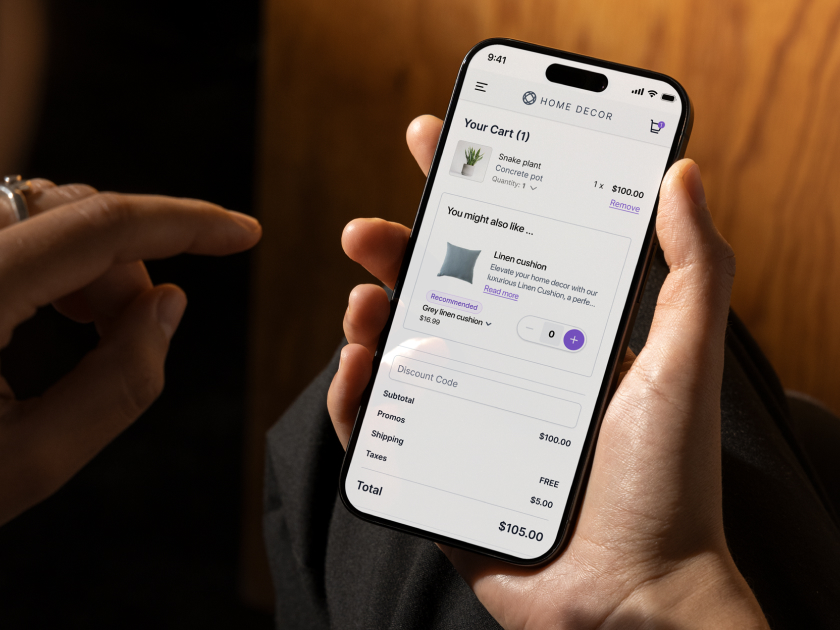
In an ecommerce transaction flow, customers are shown choices: payment methods, add-ons, product recommendations, offers, and experiences. Left unchecked, those moments can create friction or distraction. Rokt is the intelligence layer behind the transaction, determining what shows up and what doesn’t, so each interaction is more relevant, more useful, and ultimately a better experience for the customer.
One of the most important points he makes is also one of the easiest to miss: relevance isn’t only about adding something “good.” A big part of relevance is removing what’s irrelevant.
Bruce connects this to the paradox of choice. Too many options can distract customers and reduce conversion. The job is to make the experience cleaner and clearer, so customers see what matters, when it matters.
That’s the work Rokt is built for: unlocking real-time relevance in the moment that matters most.
Growing through disruption
The episode also covers the part of the journey that looks smooth in hindsight and felt anything but at the time.
Bruce talks about the early years of Rokt, the decision to expand into the US, and the reality that many “global” ecommerce relationships are won in a small number of rooms, with a lot of persistence behind the scenes.
He also shares a vivid example of why diversification and resilience matter: when COVID hit, entire categories shut down almost overnight, while others accelerated. In that kind of environment, survival isn’t about prediction. It’s about readiness.
One of the most actionable lessons from the episode is his view on playing the long game when markets turn. If your balance sheet and model give you flexibility, you can invest when others pull back. That’s how you build leverage over time.
A culture built for builders
Bruce doesn’t avoid the hard topics. He speaks directly about culture, the intensity of a high-performance environment, and why it won’t be the right fit for everyone.
His framing is simple: if you’re building something that’s changing fast, you need people who want the pace. You need people who want the challenge. And you need a culture that’s designed for speed, learning, and ownership.
He also makes a point that’s often missing from culture conversations: the rewards should match the expectations. In the episode, he points to long-term career growth, exposure to hard problems, and meaningful ownership. He notes that a significant portion of Rokt equity is owned by employees and ex-employees, reflecting a belief that the people building the business should share in its outcomes.
Success you can share
Toward the end of the conversation, Bruce shifts to what success is for, and what comes next.
He talks about staying mission-led, not milestone-led. The focus remains on building a durable business, with the right team and structure to keep delivering through the next wave of change.
He also shares how he and his wife, Elizabeth, think about giving back, including education and career opportunities that open doors for people who wouldn’t otherwise see them.
The theme is consistent with how he talks about leadership inside the company: you’re given a jersey for a period of time. Your job is to leave it better than you found it.
Three takeaways for builders
If you only remember a few points from the episode, start here:
- Keep doors open until you’ve earned clarity. Early certainty is overrated. Exposure and reps create real direction.
- Relevance requires subtraction. Improving the experience often means removing distraction, not adding noise.
- Play the long game with conviction. Flexibility creates opportunity when markets shift. If you have it, use it.
Bruce’s story isn’t a straight line. It’s a builder’s story: learn fast, stay focused, and keep raising the bar.
If you want the full conversation, listen to Bruce Buchanan on The Australian Financial Review’s How I Made It podcast.
Audio Transcript
The success of Rokt a $7.2 billion ecommerce, marketing tech firm has gripped the tech world, founded in Sydney and now based in New York. Its client base includes some of the world's biggest companies, from Disney and Uber to Ticketmaster and Booking.com. The man behind one of Australia's most valuable private tech companies is former Jetstar boss Bruce Buchanan. So how did a boy from the New South Wales, Central Coast, come to start one of the hottest tech companies in the country. Let's find out. Welcome to how I made it a podcast from the Australian Financial Review. I'm your host. Yolanda Redrup, thank you for joining us today, Bruce. It's obviously great to catch up again and learn a little bit more about your story before we dive into the sort of creation of Rokt. I firstly want to know, how would you describe what you do at Rokt to your family?
They always ask that question, like, what do you do, dad? And it's, it's one of those hard things to explain. I think, you know, when people start seeing it more and more in the wild, then it becomes more obvious to them. So, you know, when we talk about helping people optimize their ecommerce transactions, that sort of makes sense. You know, the one thing that got a lot of cut through with the family was when they started seeing the logo on an F1 car. And then the Lego set came out with the Rokt logo on the side of the racecar. That was for the kids, then the business had really made it.
Tell us more about the work you’re actually doing at this giant company, Rokt, that you’re building.
Yeah, so the simplest way to describe what we do is if you're buying something in an ecommerce transaction flow, the things that you see in that transaction, like which payment options, which product options, which recommended add ons, what advertising you see. Rokt is the intelligence layer that sits behind that. We actually power the products, we power the payments, we power the ads. And 90% of what you'd see in an ecommerce transaction, you wouldn't know it's Rokt. Rokt is invisible, but we power the smarts behind all those different pages and placements.
Alright, so tell us a little bit about your actual upbringing. Where did you live? What did your parents do? What kind of interests did you have as a kid?
I had a bit of a mixed upbringing. My father was originally from America, my mom was originally from the UK. And so through the fate of World War Two, both their parents, post war, had gone back to the country and migrated to Australia when both my dad and mum were relatively young. And so they all had roots back into the UK and the US. And so I spent a couple of years at school in the UK, and I spent some time in the US, and then my parents split up when I was quite young, and my mom moved up to the Central Coast, and I went with her. And very soon after that, she got sick with cancer, and she, for the next five years, she was really battling leukemia, and that was tough. And so there wasn't a lot of commuters up there. And it tended to be a relatively small community. And so there's one big high school, the entrance High School, which I went to. And the good thing was, it was like a melting pot, because there wasn't any other choice. So you had the doctors’ children and you had the plumbers’ and the milkmans’ and everyone was in the same school. But it was a massive school.
So what kind of kid were you in school? Were you sort of bookish, sporty? What were you into?
I loved computers, and I loved music, so they were my two passions. So I was one of the first kids that saved up, and I did a lot of handyman work and bought one of the first Apple 2 computers. And I used to go to all of the meetups, and I'd work out how different software worked, and I went on coding camps, and I was generally good at math and naturally gifted in sciences and things like that, so that always came easy to me. I wasn't that interested in school. Dealing with the personal stuff with my mom was always a big emotional issue, and looking after my sister was a, she'll probably tell you, I didn't do such a great job, but it was always a big time suck, and, you know, just generally trying to survive later on and in school, I had a pretty tough choice to make. When my mom passed away in year 10, I wasn't sure if I was going to continue through high school and or drop out. And I decided I was going to continue on, and I started doing handyman work. I lived on a friend's floor for a year, you know, and got some financial help from my dad, who helped me pay for some of that. And then, you know, all of that was a tough upbringing for the last few years of high school. And so that was also a different preoccupation, then, in terms just growing up very, very fast.
When your mum passed, that would have been a really formative time for you. How did you get through such a huge challenge when you still had two years of schooling and left you were still just a teenager yourself?
Well, in some ways, if you go through a lot of stress and heartache and you see someone that you love very deeply suffering from a lot of pain, it's also it's this mixed feeling, because there's some ways it's somewhat of a relief when you're seeing someone battle with something so horrible for a long period of time. It's probably one of the worst ways to watch someone pass away when they're battling with the disease, like that's degenerative for a number of years. So it's this really mixed feeling, where you feel relief for the person that they're not in pain anymore, and at the same time you feel this, you know, deep loss. Look, it just forces you to grow up fast. You know, it's one of those great analogies I always say to the team is those people that have faced a lot of adversity early on, typically can deal with a lot of different problems and challenges. I call it the paradox of parenting whenever I'm talking to my wife or other parents, which is the greatest thing you can do for your kids is set them free and let them face some adversity. But you know, the natural inclination of a parent is to want to look after your children and care for them immensely, and so you tend not to expose them to the sort of things that actually help them get much, much more adept at dealing with the challenge to come later at life.
You’ve always had that natural sort of interest in technology and computers that you were sharing. What were you sort of imagining, I suppose, for your career and your life post schooling at that point?
I knew that I wasn't really that aware of what I wanted to do. I think the only real sense that I had was I couldn't make that call at this point in time, but I didn't want to shut any doors. Really, it was a thought process, more around what's going to keep the options open for me while I explore what I'm passionate and interested about. I'd known I'd always been good at doing business. I knew I could survive. I'd had the confidence built up at a very young age buying and selling things, and at age 16, I'd start a handyman business, and I'd paid my way through school, and so I never fully feared that I would be destitute or not able to make a dollar, and so then it was really I need to get some time and some experience and get some exposure to a lot of different fields to get an understanding of what I'm really passionate about. And then I was passionate about computers, and I was passionate about the way people worked and consumer behavior, and that's why I'd been doing all these weird businesses sort of at an early age. I also wasn't the best student, so I didn't get fantastic grades, and I'd really struggle with mum's situation, and that sent me off the rails a bit, and so I ended up getting involved in engineering, but it was more, what I was impressed with was all these very generic courses, which was like, you're going to do management and you're going to law and you're going to business accounting, you do industrial relations and you're going to project management? I thought, well, there's a broad enough set of skills there and exposure where that's going to be useful no matter what I do.
So you studied engineering. Was that your first sort of big career break out of uni?
I started working in a CAD CAM technology business in high school. Actually a guy that my dad had tutored in math. One of the guys who tutor was doing this business in computer aided design, and I went to work for him part time because I was just trying to keep an income. And it got to a point where he was going to exit the PC business. And I said to him, look, I was interested in, I’d buy that business. And when I bought that business, he agreed that I could pay him back over, you know, two years for the cost of acquiring, and he could exit the business. And so by the time I got to the last year of university, I was already working full time in that business. And the problem with that business, I did it for three or four years, and we work with a lot of large manufacturing firms and small manufacturing firms, and every year through those years, this is going back, God, so it's 1990. What would happen is the Australian manufacturing business, our clients were disappearing every year. So those first four or five years in the 90s, you had all these tool makers and plastic mold makers and people are making fridges and all sorts of weird and wonderful equipment. Every year, a couple more of them would disappear and so I ended up exiting that business. And a couple other people that were involved in it took it on. But it was, it was a business that was rapidly disappearing, but I got enough money out of that to buy a house and to pay for an MBA, and I went back to the University of New South Wales to do my MBA. In the first year of doing my MBA the consultants used to come in. They run these case studies, and I was fascinated, because they were running these case studies on airlines and different marketing and pricing models. So I didn't know anything about consulting, but I interviewed for a few consulting firms and got a few offers. The one I accepted was with the BCG. And my first client was Qantas, which was kind of a weird, serendipitous,very serendipitous.
So you're at BCG, you know, the first big project you put on is Qantas. Tell me about what you were doing with them and what that was like.
So one of the early projects I worked on, they got us in to help them redesign the loyalty program with a primary intent of how to counteract low cost carriers in the Australian marketplace. And we did some really cool stuff. For the first time, we came up with lifetime loyalty programs. We came up with international upgrades for the first time for Quatas. But then BCG had this sort of top 1% program where you go anywhere in the world and work on any projects. And I said I could go to Boston head office, and I was there for a few years, and that's when they asked me to come back and lead the team for Jetstar a few years later. But it was through that first early case of that getting exposure and doing some work with these people that led to the Jetstar piece later on.
So let’s talk about Jetstar. Second to starting Rokt, it’s probably what you’re most well known for. When did you start working on that project?
I was working for Delta Airlines, actually in the US, and I got the call to come back and help write the business case for Jetstar. And so that was just over three years later, and came back to lead the consulting team for BCG, and Alan led the client team. And so I worked hand in hand with Alan and building the business case for Jetstar. And then we presented the board twice, and Alan, said, Why don't you stay on for six months and help set it up? And that turned into 10 years.
How did BCG feel about that?
BCG were wonderful, actually. But to preserve the flexibility, they gave me the first three way employment contract that they've ever done. It stayed around for many years because I kept going to do a bunch of things in BCG, until, I don't know if you remember what Qantas had that takeover, AP Airline Partners private equity coming in. I think it was like 2008 or some time like that. And so that stayed all the way through to that point. And then when they the private equity were coming in, they were like, we don't have these, you know, complicated three way employment agreements, you need to get off that.
Can you give us a picture because obviously it was a fledgling airline, literally just starting up when you first came in. Where did it get to? How big was the Jetstar sort of business, I suppose by the time, I think you eventually left around 2012?
Yeah, it grew quite a lot. It especially grew after 2008 when we launched the international, long-haul business, which generated quite a bit of revenue. So I think we got up to about $3 billion in revenue. We had 7,000 direct employees in all the different entities and 7,000 contractors. We were in 17 countries. It was a big operation. And some of the most interesting things, you know, we were one of the first to buy 787s, we were one of the first to buy the 8320 Neos. We were the first to do franchise in airlines, the first to do long-haul low-cost, we were the first to go into a lot of these markets like Myanmar and Western China. I remember for a couple of years negotiating with people like the Japanese shareholders and also the MLA team in Japan to open up the Tokyo market so we could bring low-cost carriers into Japan. So a lot of really interesting problems and you get exposed to a lot of different economic structures, problems, markets, shareholders, a lot of those people I’ve stayed close to over many, many years because you just learn a lot from a lot of different people as you build businesses in lots of different markets. The cultural differences, the way of doing business, the market structures and regulation. I mean, ultimately businesses are all about working out how to solve problems to serve customers, generally. By the exposure to so many different problems at such a young age I think really opened my mind to how different some of these markets were and how much opportunity if you can actually work out how to navigate them there is.
Do you think if you’d stayed at Jetstar, the business was going so well and you'd built it up to be a really successful brand for the company, do you think you would have been on track to be Qantas CEO one day if you’d made a different choice and stayed in the business?
I think that was a possibility. You’ve got to be careful about doing what you’re passionate about. I think when you're working at the pace, you're working at the top of your game, in a really tough industry, if you're doing something that’s not naturally suited to you, it’s very easy to get in a cycle where you get burnout very quickly because these jobs are not 9-5. They’re always on, they consume every ounce of you and if you're trying to grow a business very rapidly, you put everything into it. You leave nothing on the field, so to speak, you play the game at the hardest level you can when you’re growing a business this fast. Jetstar was quite similar. We had an opportunity and I had a conversation with Alan and the board at the time where we could have continued to take Jetstar to a path where we had a potential to list part of it in Hong Kong and we had an opportunity to get a license to get a licence to go out of Hong Kong into the mainland Chinese market, and I think a lot of us would have stayed on there and we could have given some of the employees equity and a whole bunch of other things. But Qantas rightly decided that that opportunity wasn't for them, they wanted Jetstar to be primarily domestic protection for Qantas, and so that opportunity continued to grow and build a business was not there. They did want me to go into Qantas on a path to become CEO of Qantas and that’s why the chosen path was going around Qantas International, but I knew that wasn't who I was so I said to Alan, look I appreciate the offer but I have got to be true to myself and that is not what I’m interested in. I’m interested in being an entrepreneur and building my next business and my passion is all about seeing these teams of people come and see a business continue to take off. And so if we were doing that at Jetstar I would have stayed there, but then it became like manage the status quo and then you are on a path towards Qantas CEO, and that’s not for me. I’m not the right person for that job. We left on good terms but I was like, that’s not the path for me.
You had decided to finish up at Jetstar and walked away from what seemed like a real possibility of becoming Qantas CEO. You knew you wanted to leave, it was no longer going to be listed on the Hong Kong Stock Exchange, and with you had this sense that opportunities for growth were going to be limited, but did you know what you were going to do next?
Well, I had been thinking about the problem that Jetstar had in this ecommerce funnel all the way through building Jetstar, and thinking about how I can unlock the economics. I was very passionate about boosting the ancillary revenue and changing the brand so we can stimulate the market. Because everyone was competing on costs and I always through the commercial aspect could be a much more interesting way to differentiate yourself from all the other airlines over time. We were in a very strong position, but there were some things we just couldn't crack because we didn't have a business like Rokt. We didn't have the technology, we didn't have the brain, we didn't have the network, we didn’t have the ability to tap into all of those other products. And so I’d been working on that problem a long time. I was fascinated by that problem if I could solve it, and I was like, okay that’s a good path for me then. The growth path at Jetstar is going to change, time for a new thing for me to do next.
How did the foundations of Rokt come about? I know you acquired a business called Rokt Live and that was sort of the starting point. But tell us about what led to that and how you ended up developing Rokt.
Yeah, so I met a guy called Justin Viles, who's quite a character. And anyone that's met him, he's like, he's like, someone that's had 10 Red Bulls at any point in time, his energy levels off the charts. He was originally a chef, very creative guy. He'd originally started his business Rokt Live was originally started to bring live events into pubs and clubs in Australia, and then the GFC hit, and he lost all his funding from Optus, and then he previously worked at Google, and he turned into doing marketing, and digital marketing is essentially the thing. But he managed to sign this agreement with Ticket Tech. So he had this one contract where he was doing, sort of blending together digital marketing on the end of the confirmation page of Ticke Techt, along with, like, helping with the email marketing, helping with a bunch of other things. And I was, like, fascinated by this ecommerce problem I’d being struggling with at Jetstar. And we, I came to him, he's like, I need a CEO. And I go, well, I need a starting business. And so I had a company in Singapore, and we acquired the Rokt Live business. It became Rokt. We became equal shareholders in the business, and we ended up cutting out, you know, 80% of what that business was doing at the time. But we use the seed of Justin's sort of creative innovation of what he'd done for Ticket Tech and the passion around ecommerce and blended together. Said, this is a business we're going to build. And, you know, it was rough for the first few years. I had to fund the business for the first year, we had no cash flow because we cut off everything we were doing at the time to allow us to focus on the ecomm problem. We got traction probably six months in. And it got a lot easier then. And then at the end of 2013 we did our Series A and it became a lot easier with some funding. And then we started expanding into the US, and started growing from there. And it became very evident then we'd made a big mistake in starting in Australia, all of the clients that we needed to talk to to build a global ecommerce network were actually in the US. And so for the first two years, and I commuted two weeks on, two weeks off, and then my wife basically said to me, we're either moving to the US, or we're getting a divorce, and that's an easy decision. Let's move to the US that that was, that was the evolution of how we started and how it ended up coming to be.
I want to touch on the capital raisings that you've done as well. Your first check, I think, was, you know, something around $8 million. Since then, you've gone on to raise hundreds of millions. And you've also done a number of secondaries in there too. What was the toughest round to raise? Have they all been quite smooth? That's what's that process been like?
Yeah, some of them were tough, like the series A I think we were at a sale and scale and size where it wasn't that hard, because we had my reputation in Australia, the business valuation was like circa $45-50 million. So it wasn't a big bet for a lot of the businesses to put some dollars behind it, and we raised that money relatively quickly. I think the series B was probably the toughest round. I think it was 2016 or there about we were a few years in, and the business had done well, but hadn't shot it out of the park, and we were still struggling to get a lot of momentum. We had some big clients in the US, like Ticketmaster and Live Nation, but we still hadn't got into retail yet. We still had diversified, so the growth rate was still strong, and I think the valuation round was more than double what we'd done in the series A but that was a harder round to get away and then we started to get a lot more momentum. And one of the things we had going for us right from the start is we build an economic model where we're essentially profitable from day one. You know, we have this partnership model where $7 out of every $8 go back to our partners, but that meant that we were self funding at least, and so we could grow very quickly and invest in our partners. And so being profitable and self funding made a massive difference in terms of the funding rounds later on. And so most of that switched more to secondary later on.
So by this stage you’d move the business to the US and you’d managed to bank some funding. The 2019-2020 rolls around and it seemed like it was a bit of a rollercoaster period for Rokt. The business experienced some big challenges and also some big milestones. Can you tell us a little bit about that period and how it actually changed the company?
It's funny, when you look at a business, it always looks like an overnight success, but it was hard. It was a hard struggle for many years. But I remember, in 2019 you know, there's a few big milestones, like when we signed one of our first big contracts in the US. We signed a number of big ones, but one of the first big ones that we signed early on was Live Nation Ticketmaster. And they believed in us early on and trusted us and grew with us, and that was the big milestone. But I think from a revenue standpoint, I think we hit $100 million in 2019 and we grew extensively in retail. We bought a business, called Offer Logic in 2019 and that had B2B, but it also had some retail clients, and that we expanded rapidly into that sector. And then COVID hit, and so we just got into retail in 2019 and literally, 65% of our business turned off at the start of COVID. But our retail business took off with COVID. So not only did it take off in terms of volume, as everyone stayed on board online, but every retailer also came on board, and we saw a massive expansion in that. So we had this weird profile in COVID where Q2 we dropped 65% and by time Q3 came about, we were back above where we were in Q1 and we ended the year flat, but it was like this massive trough in the middle, and that was really a massive amount of diversification in the business. And Elizabeth, who's my wife, who was leading the commercial team at the time, just did this enormous job of working to navigate the retail sector and building it out, and really drew drove the commercial success of that year, which was massive in terms of getting us to where we got to in a couple years later on. So you look at our growth rate, what's interesting is 2019 I think we did roughly just around $100 million. We did roughly under a million in 2020 and then we've normally grown at 40% and then in the following year, we doubled the growth rate, which essentially just catching up from the COVID thing that we saw some rebounding COVID activity so tough years, but also really formative in terms of diversification and scale. So one of the interesting things actually through that time is one of my board members, Tom Cowan, I remember ringing him in that Q2 period when the business fell, you know, 65% or whatever it was, crazy. We had categories like live events that dropped 97% in a week. What industry turns off 97% of activity in a week? It's not some sort of contingency planning. And, you know, he gave me some good advice at the time, which is, basically, you know, that people that are contrarian and play the long game with these sorts of things often come out the best. And we invested heavily in the business at that point in time. We hired and when everyone has stopped hiring, we hired some of our best people during that period of time. And so that ability to build confidence and go contrarian, if you've got the balance sheet and economic and support in the business, is very, very powerful. So if you're in the cycle and you're sailing very close to the wind, and you've got no financial flexibility, you're in trouble because then business turns that way, you've got no flexibility. But if you've got strong balance sheets, strong economic model and good flexibility in your business, the ability to be contrarian and really build long term value is an incredibly powerful lesson I learned early on.
The company has received a lot of positive coverage, and rightfully so around the growth, but there is one issue that the company has coped some flack for over the years, and that’s its culture. In our past conversations you’ve been quite honest about it and you have built this Navy SEAL-like environment. Tell us how you embedded that work ethos in Rokt?
Yeah, I think none of us are involved in this business to make money. We're very missionary led. You know, we're passionate about both our foundational work and our Community Give Back and the business we want to leave, and so we're building this incredibly successful large business that’s built to last with a very positive impact on the ecosystem. But any business that's trying to trade that transformational change is tough, and you get any business that's rapid growth, founder-led, and you then put like 20 different founders, CEOs in the board and the executive team. And it's an intense environment. You know that many founders. And so it is a bit like joining the Navy SEALs. It's got to be right for you. What's great about our business is that you can spend five years in developing your career in Rokt, and it's like doing 20 years somewhere else, the problems and the people that you get exposed to just develop you at such a pace you're working with some of the smartest people and the best CEOs and founders at every level. That is an incredibly high bar and high standard, but incredibly tough in terms of the arcs that we put in. Now the rewards, they're both in terms of career and financial, but it's not for everyone, and so we recognize that, and look, we made lots of mistakes along the way, like the move, started the business in Australia has gone through this big structure change. We had to move a bunch of the real time services back to New York, we're now doing a lot of prep for AI. We bought a business mParticle at start a year, wonderful group of people, but they were fully remote, and there were 220 of them, and we're fully in person like and they were all over the place. There's people in Alaska and provinces in, you know, Argentina and eastern Europe, and we're like, so, like, there's been 60 or 70 people leave that business because we said, look, you've got to move to the office, and that's a big transition. Like, some people, yeah, they can't pack up their lives and come to an office. And so that creates a lot of noise and churn, and it's hard. And people, I think, you get this weird dynamic where people see the opportunity and really want to be part of it, and then if it doesn't work personally for them, there's almost like this fear of missing out. And I understand that, and we try and put support around people as much as we can, but it's definitely not for everyone. Like this is a tough business to work in, and you've got to be hungry for it. There's no point showing up to Rokt going, I want a nine to five job, or I want the easy path, like, this is a tough business, and we are at the top of our game.
Something a lot of companies at the top of their game start considering is an IPO. It’s a topic that garnered a lot of attention for Rokt over that last few years and has been a point of speculation for some time now. It is on the company’s agenda, you’ve talked about that before. There’s even been talk recently about a possible dual listing between the NASDAQ and the ASX. Now, I remember you saying that running a listed company is something that excited you even back in the Jetstar days. Where is your head at currently regarding a Rokt IPO?
I think what's important is, if your mission and vision led, is not to get too distracted by these things that happen on the way through, they're important milestones, like, you know, winning a big client, or cracking the US market, or, you know, transitioning from private to public, but they're not the reason why the business is created. So I think everyone, everyone likes these big, shiny things that are big milestones, and you can understand why, you know, there's liquidity and there's financial reward, and it's a much more visible brand from that perspective. But my brief to the team, and I think what's important to stay focused on is that's just a piece of the journey, there's nothing in our mission and vision that talks about becoming a public company. You know, we don't get up every day going and we've been public. And so for us, it's an important transition. But having been involved in public companies before, I also knew it can be a big distraction, and that's one of the reasons why I've held it back for as long as possible. I think we're getting to the size and scale and now where the benefits outweigh the cost, and so we should be thinking about transitioning. I think we're in a good shape. We've got a good team. We've got a great board, you know, we're ready to do that. We don't have to, though the economic model of our business is very strong. There's no desperation or rush to a timeline. So there is an opportunity also for us to do dual listing, which would be an interesting first we like conquering new ground, but we can't do that in a way that sacrifices long term. And so there's great conversations going on. I wouldn't say it's a done deal at this point in time, but there's definitely the opportunity for us to help pave the way, even if it's not for us. I think the conversations are probably going to continue on where it creates the mental model of this could be a really effective path for the Australian Stock Exchange to play a bigger role for these rapid growth Australian businesses that are succeeding on the global scale. And so, we're trying to do our bit to create that path for others.
Finally, thinking about your journey and the success that you’ve had, something that I want to know is what percentage would you pin down to luck, timing, and hard work?
I get asked this question all the time, and I had an induction group, we had our biggest induction group a week ago at Rokt a week ago, and so there were 95 people standing in front of me, and we do this every 6 weeks, and I was saying to them, look 2 lessons that I think have been the most important that I’ve seen, not just with myself, with others to succeed, one of them is, the most likely indication of people that tend to succeed over a longer period of time is not the smartest ones, it’s not the ones with the most money or the ones with the most opportunity. It's generally the most stubborn, determined, persistent ones. And the reason for that is that when you try and do something really hard you fail a lot. You have to stand up to a lot of feeling like you're a failure and getting through that emotionally. And so the number one thing, my advice for people, if you want to be successful, you’ve got to get beyond the fear of failure, you've actually got to lean into it and you’ve got to understand that every single thing you do right or wrong is an opportunity for you to learn. Your internal compass is the thing that is going to drive you and you're not too worried about if you make a mistake, or you look foolish, or something goes terribly wrong. Stay focused on the long run. And the second big lesson in life I’ve found is the 10,000 hour thing, which is nothing happens that is worth doing that’s an overnight success. And people don't become good at anything, really good at anything without a lot of practice. If you want to be the best at anything, you’ve got to put the time in, and there’s really no substitute for investing time.
So when you think about luck, is there any part of your journey that you would pin down to luck?
If you're determined and you're out there, you put yourself out there, you're going to have opportunities that emerge all the time. You have got to have the wherewithal to grab them, and run with them when you see those opportunities. I don't know if I had an unusual amount of those opportunities or I didn't. In some ways when I was at university and I saw the opportunities that some of my friends had because the wealth and the schooling and the parents and the networks that they all had, I just was amazed at why they weren't taking more advantage of the opportunities that were in front of them. And so I always felt like I didn’t have access to the same level of opportunity. I looked at people that were at these private schools and think about all the natural advantages, the tutors, the networks, and the students who they went to school with and what they all went on to and their parents. And you think about just that natural network advantage of wealth and socioeconomic advantage, and the network structures that support that, and I would say that you don't need that. I mean obviously that’s an advantage, but I think in some ways that not having thing and understand how much you value those things is also a gift and so when you see an opportunity like then you go, okay I met someone like Alan, I value them, and respect them, and I’m going to put the time into them, is an important milestone, because it give you much better perspective than I think someone that just finds opportunities all around them and doesn’t understand the value of that opportunity.