



Creating a positive and seamless customer experience—and implementing effective post-purchase marketing strategies—should be the priorities of any ecommerce company. In fact, companies’ capabilities in these areas increasingly serve as competitive differentiators within the ever-crowded ecommerce marketplace. By understanding what matters most to customers during the buying and post-purchase process, companies can maximize their overall marketing ROI while creating brand advocates.
Keep reading for an overview of the keys to increasing customer satisfaction—and unlocking additional, incremental revenue—during the post-purchase process. Among other topics, we’ll explore the key stages of the ecommerce buying process, as well as some best practices that can help you optimize them for the best results.
What are the 5 stages of the purchase process in ecommerce?
There are typically five stages of the consumer buying process in ecommerce, spanning from initial awareness through retention and advocacy. Getting each stage right is the key to the kind of seamless customer experience people expect. Let’s break down each of the five stages, along with their primary objectives.
- Awareness: This relates to how potential customers learn about specific products, services, and brands; primarily driven through traditional marketing campaigns, as well as organic recommendations/referrals.
- Consideration: As customers narrow down their options to find the best fit for their needs, priorities, and budget, it follows that the companies that provide compelling and informative content on their website to help customers see the value of different solutions will be in the most advantageous position to win their business. This approach also enables customers to better understand exactly how your solutions can meet their needs, and for brands to craft their own stories.
- Decision: On a basic level, this stage is self-explanatory—it’s where customers commit to one product, service, or provider over its competitors. By understanding what customers want, expect, and value most, companies can showcase themselves as the best solution for their needs.
- Retention: While most ecommerce companies realize that keeping existing customers happy is more cost-effective than creating brand-new business, customer retention can be tricky. Today’s customers tend to be less loyal overall, due to the fact that new products and services are constantly entering the marketplace and customers have access to more information than ever before. When done right, though, this stage of the buying journey can transform a single transaction into a long-term customer relationship.
- Advocacy: Going one step further than retention, the advocacy stage of the customer journey can be difficult, yet undeniably worthwhile. It’s one thing for customers to be satisfied with their purchase (and likely to do more business with a company over time), but another thing altogether for them to vouch for the brand through online reviews, social media posts, and word-of-mouth referrals. We’ll discuss these post-purchase outcomes in more depth a little later.
What is the “post-purchase” period?
In terms of the ecommerce buyer’s journey outlined above, the post-purchase period begins after customers submit payment and spans across the thank you and confirmation pages. Despite its narrow focus, the post-purchase period can include multiple types of post-purchase behavior and forms of post-purchase evaluation, and it has a significant impact on the overall customer experience.
- Post-purchase behavior examples include actions like buying additional products or services from the company or signing up for customer loyalty programs.
- Post-purchase evaluation examples include filling out customer satisfaction surveys, leaving online reviews, and providing word-of-mouth recommendations.
It’s important for companies to recognize that every customer touchpoint matters—as each provides an opportunity to showcase how well a company understands and values its customers—and to unlock an additional revenue source through complementary offers and/or third-party advertisers.
What is the Transaction Moment™?
At Rokt, we have identified the Transaction Moment as the most impactful component of the post-purchase process. In ecommerce, the Transaction Moment starts from the moment a customer adds something to their cart and extends through the payment, thank you and order confirmation stages.

Why is the Transaction Moment so important?
Imagine this: a customer is in the market for a new gaming PC. They’ve spent hours online reading reviews, watching videos, and evaluating different products. They’ve narrowed their choices to just a couple of products and have gone so far as to add one to their cart.
If this were occurring in a brick-and-mortar store, this part of the “buyer’s journey” itself would simply consist of the customer going through the checkout line, paying for their item, and taking it home. The revenue that the brick-and-mortar store makes ends with the gaming PC.
For an ecommerce gaming company, however, the Transaction Moment represents a more substantial opportunity to influence customers’ purchasing decisions and post-purchase behavior. These opportunities can then unlock new streams of ad revenue beyond the original purchase of the gaming PC.
Furthermore, it’s no secret that customers routinely add items to their cart without being fully committed to their purchase (and it’s not necessarily a bad thing). It could be that they’re monitoring a few different products, that they want to see what taxes and shipping costs will add, or a host of other motives. They are still motivated to buy, though, and they tend to be feeling positively about what you offer.
This is where post-purchase marketing—and Rokt—can change the entire game, for customers as well as the company angling for their business. Our AI-powered platform lets you derive actionable insights from your own first-party data, helping you to better understand what is most relevant to customers. Using that information, then, to put the best internal and/or third-party offers in front of the best customers at the best time, unlocks a win-win. Customers can learn about relevant, value-adding products and services, while ecommerce companies unlock an additional source of incremental revenue.

What is an example of a post-purchase experience?
Within the framework of the ecommerce buying journey, the customer’s basic post-purchase experience begins with their buying decision and extends through the retention and advocacy stages (as described in a previous section).
Of the four Transaction Moment touchpoints—the cart, payment, thank you, and confirmation screens—it’s the last two that technically make up the post-purchase experience. Since these four components should form a seamless process, however, let’s take a closer look at each of them—and how they go together to form a cohesive and consistent customer journey:
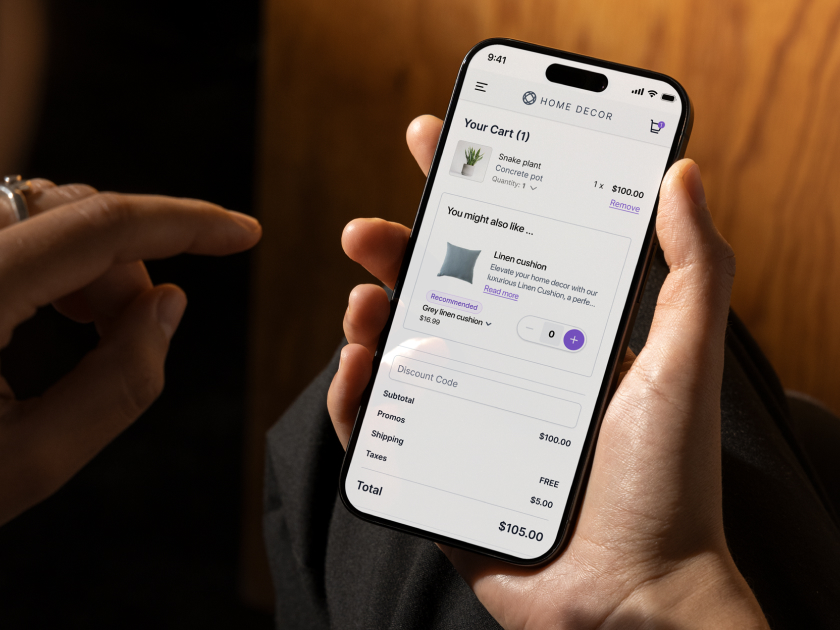
- Cart: Once the customer adds something to their cart, it’s an indication that they’re ready to buy. It’s not, however, a guarantee that they will go through with their purchase, as customers might abandon their cart for any number of reasons. Maybe the cost seems high (especially if there are shipping costs involved), or maybe they’ve been bombarded with too many irrelevant offers
- Payment: Ecommerce customers increasingly expect companies to provide varied payment options and reasonable shipping costs, and may abandon their cart if those costs exceed their expectations. Until ecommerce customers have reached the order confirmation stage, there’s no guarantee that they will complete their purchase.
- Thank you page: More than merely a formality, the thank you page of an online order not only shows appreciation to customers for their business, but it also allows ecommerce companies to promote additional offers, like upsells or cross-sells, in a post-purchase experience.
- Confirmation: If there is one element of the post-purchase process that is often underutilized by ecommerce companies, it would be the order confirmation process.
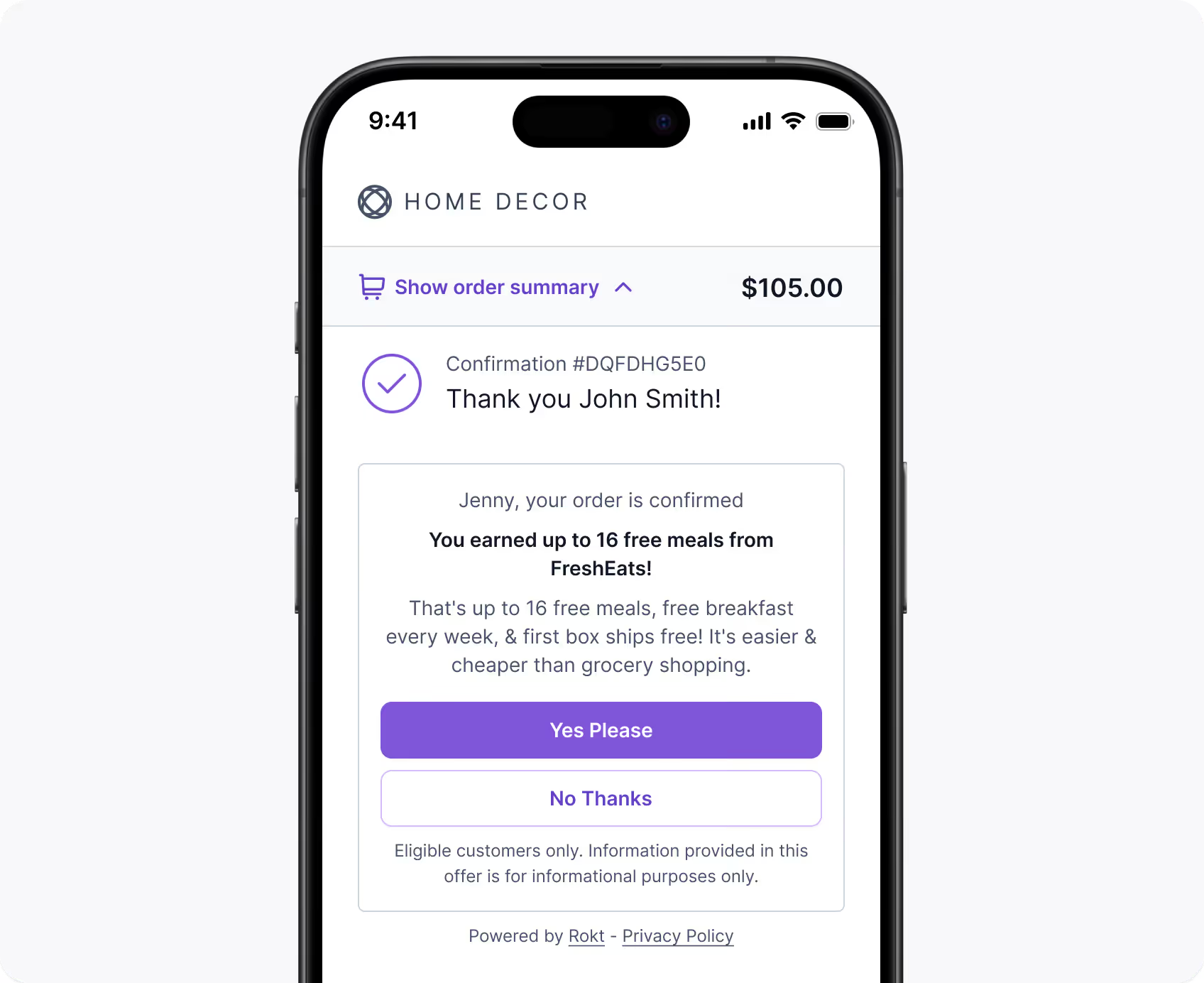
While an on-screen confirmation and emailed transaction receipt are essential, confirmation screens also provide two key opportunities for ecommerce companies.
First, they can follow up with customers by sending them additional resources (like product guides or setup instructions) that will help them get the most from their purchase.
Second, they can provide additional value to customers—and drive additional, incremental revenue for the business—through post-purchase marketing strategies like serving up complementary offers related to their base purchase. These could be add-on services for example, or non-endemic third-party advertisements. Each time a customer engages with these offers, the ecommerce store makes ancillary revenue.
By effectively tailoring these offers to each customer and transaction, companies demonstrate that they understand their customers and want to provide them with the greatest value possible—the kind of relevance that plays a large part in creating loyal customers and brand advocates.
Depending on how these stages go, customers might take any number of actions—leaving a review, saying something positive about their experience (and your brand) on social media, or recommending you to friends or family, for example. These are all highly valuable post-purchase behaviors that can boost your brand and generate customer loyalty.
What are the 3 post-purchase outcomes for ecommerce customers?
There are three common actions customers take after having a positive buying (and post-purchase) experience:
- Expressing satisfaction: The best ecommerce companies understand that customer satisfaction with their purchase is not, in itself, the only outcome. Today, companies win customers’ business by making it easy to do business with them—and prioritizing long-term relationships rather than one-off transactions. In other words, for many brands, customer satisfaction is the lowest acceptable threshold, and it’s more about how customers express or otherwise act on their post-purchase satisfaction. For example, customers might provide positive feedback online.
- Developing loyalty: When customers have a positive buying experience—including throughout the post-purchase stage—they are more likely to remain loyal to a brand over time. By making it easy to do business with your company and providing additional value to customers through post-purchase marketing initiatives, brands can transform one-off customers into enthusiastic and repeat shoppers.
- Making referrals and recommendations: For many companies, organic word-of-mouth referrals represent arguably the most powerful post-purchase outcome. When customers recommend your business to their friends, family, or colleagues, it demonstrates that they’re not only content with their purchase and overall experience, but also enthusiastic enough about it to influence others. And when people receive recommendations from people they are close to—and trust—these referrals serve as a powerful marketing strategy that’s tough to replicate.
Effectively engaging customers during the post-purchase process doesn’t just elevate the customer experience—it also provides positive outcomes for growing ecommerce companies, including the ability to unlock an additional revenue source, form powerful strategic partnerships (with different payment providers, for example), and build a strong foundation for durable, long-term growth.
If there’s one factor that has a greater impact on post-purchase satisfaction than any other, it’s that customers feel understood and valued, more than just an order number. But what turns customers off during these critical stages? Next, let’s explore a few factors that lead to customer dissatisfaction.
What causes post-purchase dissatisfaction?
There are several potential causes of post-purchase dissonance (post-purchase regret or anxiety, in other words), including:
- A bombardment of irrelevant offers during checkout, leading to the paradox of choice
- Products or services that don’t meet their expectations
- Ineffective or inconsistent post-purchase service or support
- Pricing that is too high or doesn’t make sense
- Poor communication throughout the buying process
Under Armour sportswear founder Kevin Plank is often quoted as saying, “Trust is built in drops and lost in buckets.” It’s a perspective that underscores the importance of tailoring each stage of the customer journey to what customers want and expect.
All it takes is one ineffective, irrelevant touchpoint to turn customers off, in other words, and that’s what makes post-purchase marketing so tricky. Assuming you make it easy for customers to do business with you through personalized and efficient experiences, the last thing you want is to compromise the trust and goodwill you’ve built. This creates post-purchase dissonance, which discourages customers from doing additional business with your brand.
At the same time, the post-purchase period—and the Transaction Moment, specifically—offers an opportunity too good for most companies to resist. This is the point when customers are engaged and ready to buy, meaning they’re also more likely to consider additional offers (whether internal or from third-party advertisers). Research shows that ad engagement during the Transaction Moment can be 10x higher than Google Display and 3x higher than Facebook Newsfeed.
One of the most effective post-purchase strategies involves providing customers with compelling complementary offers during the checkout process. These could relate to additional products or services from your company or be relevant third-party ads, each providing additional value to customers and an incremental revenue source for ecommerce businesses.
But getting this strategy right requires customer insights as well as strategic foresight, as it can basically go one of two ways:
- Either the offers are relevant and add customer value, or
- The offers seem arbitrary, or there are too many to choose from, making customers feel like they’re either not understood very well or simply being squeezed for additional revenue.
What is the key to positive post-purchase experiences?
The key to improved customer outcomes—and increased revenue—relates to how companies optimize the post-purchase experience for their customers. And the key to optimizing these stages of the buyer’s journey is relevance—especially when talking about post-purchase marketing strategies.
Let’s say you’ve decided to start promoting additional offers to customers via the order confirmation screen. Whether your strategy involves selling complementary products and services from your company or increasing revenue via third-party advertising, the offers you present to customers must have clear and compelling value.
Some companies might assume the best way to ensure relevance is to push many different offers—their thinking is that customers will find something pertinentes para ellos. Sin embargo, esto a menudo resulta contraproducente, ya que paradoja de elección es muy real. Cuando se enfrentan a demasiadas opciones, muchos clientes las rechazan por completo.
¿Cómo ayuda Rokt a las empresas a optimizar el momento de la transacción?
La plataforma basada en inteligencia artificial de Rokt permite a las empresas utilizar datos propios (lo que ya saben sobre sus clientes) para comprender mejor su comportamiento y sus prioridades. Esto, a su vez, les permite no solo mejorar la experiencia del cliente con relevancia, sino también desbloquear un flujo de ingresos adicional a través de ofertas adicionales y anuncios de terceros durante el Momento de la transacción.
Rokt le permite aprovechar el poder de la inteligencia artificial para generar información procesable a partir de datos de primera mano, incluida la capacidad de predecir el tipo de oferta que tiene más probabilidades de atraer a cada cliente en un nivel individual. Este enfoque mejora tanto la experiencia del cliente como los ingresos generales de la empresa; en otras palabras, es un poderoso beneficio para todos.
En Rokt, entendemos que hay tres desafíos principales que cualquier estrategia de marketing posterior a la compra debe reconocer y abordar:
- Entender exactamente lo que quieren los clientes. Ya sabes mucho sobre tus clientes y lo que más les importa, pero saber cómo procesar y usar esa información puede ser algo completamente diferente.
- Determinar la estrategia o estrategias correctas de marketing posterior a la compra. Cuando sabe lo que los clientes quieren y esperan, está mejor posicionado para cumplir con sus expectativas. La plataforma impulsada por la inteligencia artificial de Rokt permite a las empresas de comercio electrónico ofrecer recomendaciones oportunas para las ofertas posteriores a la compra que tienen más probabilidades de generar conversiones.
- Optimización del momento de la transacción. Optimizar el momento de la transacción significa comprender cuándo es más probable que los clientes consideren productos, servicios u ofertas adicionales y promover las mejores ofertas en el mejor momento, desde el carrito hasta la confirmación.
Descubra cómo Rokt Ecommerce mejora el proceso posterior a la compra
La plataforma basada en inteligencia artificial de Rokt ayuda a las empresas a desbloquear oportunidades de ingresos adicionales en función de lo que ya saben sobre las preferencias, prioridades e incluso hábitos de compra de sus clientes. Basándonos en más de 12 años de aprendizaje automático, pronosticamos las siguientes mejores ofertas que probablemente atraerán a los clientes y generarán conversiones.
En Rokt, una transacción es más que una simple compra: es una oportunidad para ofrecer a los clientes una experiencia de compra relevante e integral adaptada a sus preferencias, incluidas ofertas adicionales relacionadas y publicidad de terceros.
¿Estás listo para eliminar las conjeturas del marketing posterior a la compra? Visita nuestro sitio web para obtener más información sobre Rokt o hable con un experto.


%20(1).webp)
.png)