

When a customer commits to a purchase, something shifts. The browsing mindset drops away. The scrolling stops. "Everyone else stop talking to me," as Ash Firmstone, SVP at Rokt, put it on stage at The Drum. "I want to get through this purchase."
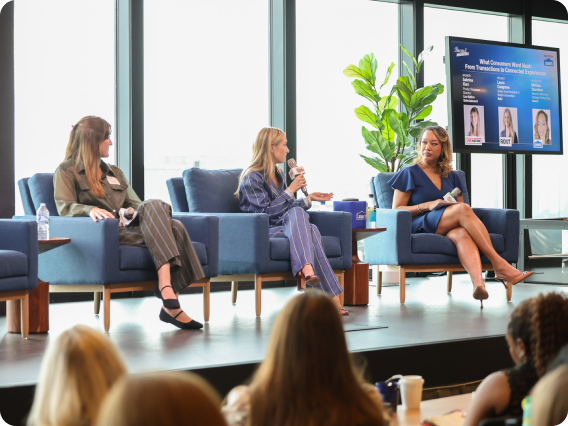
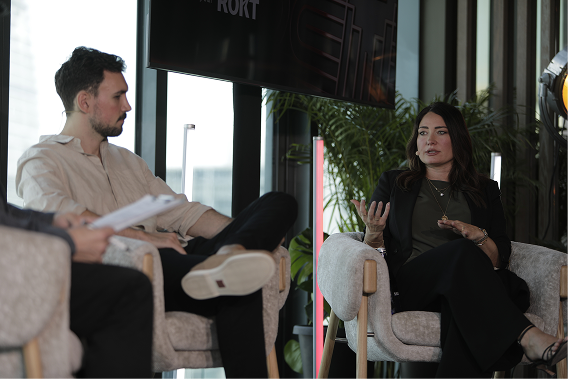
That shift is the whole argument for why the checkout deserves more attention than it gets. At The Drum’s Commerce Media Global Leaders Forum, Ash joined Felipe Abed, Global Product Lead for Commerce Media and Advertising at Klarna, for a conversation moderated by Richard Draycott. What the session made clear is that intent at the checkout is categorically different from intent anywhere else in the funnel, and the brands treating it that way are pulling ahead.
The psychology of the checkout is different from everything else
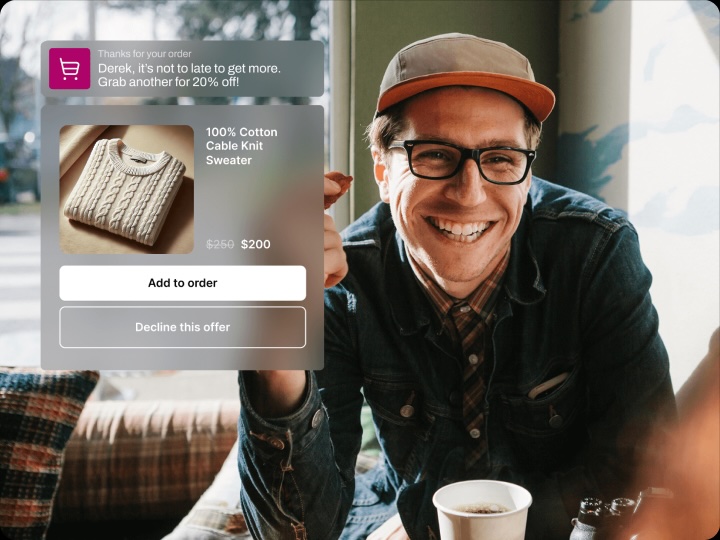
Higher in the funnel, a consumer is distracted. Browsing, scrolling, half-present. By the time they reach checkout, that feeling is gone. They are excited about what they are buying, already thinking about what comes next, and making decisions fast. This is the Transaction Moment™: a window of genuine focus that brands encounter nowhere else in the customer journey.
Klarna's position makes this especially clear. Because they see what users buy across multiple retailers, not just one, the data available at checkout is far more detailed than what any single brand has access to. Felipe's point was that knowing the category, the brand, the timing, and the behavioral pattern is exactly what makes a recommendation feel useful rather than random. “That point is probably the best time to make a very good recommendation,” he said.
Relevance is the only thing keeping CX and revenue aligned
The tension between monetization and user experience came up early. Both pushed back on the idea that the two are in conflict.
Klarna runs holdout groups to validate that Rokt placements do not compromise repeat purchase behavior or user satisfaction. The benchmark is not just engagement rate; it is whether users keep coming back. Felipe was direct about the discipline required: "We've been spending a lot of time making sure we are not compromising the experience."
From Rokt's side, Ash pointed to downstream metrics as the mechanism that keeps this honest. Optimizing for clicks creates the wrong incentives. When the goal is confirmed conversion, what gets served has to be relevant enough to actually move someone through a purchase. Relevance is not a soft quality bar it’s a hard performance signal.
What AI is actually changing at the checkout
Both panelists described AI as central to their data infrastructure, but the emphasis was on prediction and personalization at scale rather than AI as a replacement for anything the checkout already does well.
For Klarna, AI enables richer user profiles built on purchase behavior across multiple retailers. The practical application is next-purchase prediction: understanding what a user is likely to want based on what they have already bought, and surfacing something adjacent at exactly the right moment. For Rokt, AI has always been at the core of real-time decisioning, and the focus now is on connecting data points to better anticipate customer needs before they reach the checkout.
Where it gets more contested is agentic commerce. The assumption is that AI agents will take over shopping, and the checkout as a human experience will fade. Ash pushed back on that directly, and her reasoning started with something simple: people actually enjoy buying things. When someone books a trip or buys something they have been thinking about for weeks, they are excited. They want to see what the brand stands for, explore what else is on offer, and understand the loyalty program. That moment has emotional weight. Handing it to an agent means giving away one of the few remaining places where a retailer can build a direct relationship with a customer, and most consumers are not ready to do that for purchases that matter to them.
The practical evidence supports it too. OpenAI has already stepped back from checkout transactions, which signals that owning the payment and conversion moment is harder than it looks from the outside. "I still believe that the last mile is going to be owned by the retailer," Ash said.
Felipe drew a useful line: agent-led commerce makes more sense for habitual, repeatable purchases than for considered ones. Buying the same coffee or cleaning product every two weeks is a different decision than buying a laptop or booking a trip. The purchase type determines how much autonomy a consumer is willing to give up, and the industry needs to map its strategy accordingly, rather than treating agentic commerce as a single wave that affects everything equally.
The measurement gap is what is holding the industry back
Ash's closing advice to the room was practical. For retail media networks and the brands working with them, the unlock is not more inventory or more data. It is a standardized approach to measuring performance across networks.
Right now, brands face a fragmented picture. Every retail media network measures differently, which makes it difficult for brands to compare performance, allocate budgets confidently, or justify scaling investment. "How do we systematically come up with measurements and enable brands to utilize the data," Ash said, "because it's what's going to unlock spend for everyone."
It was the most concrete call to action of the session, and the one most likely to move the industry forward.
Watch the full panel here.
Want to learn more about what Rokt unlocks at the Transaction Moment? Get in touch.