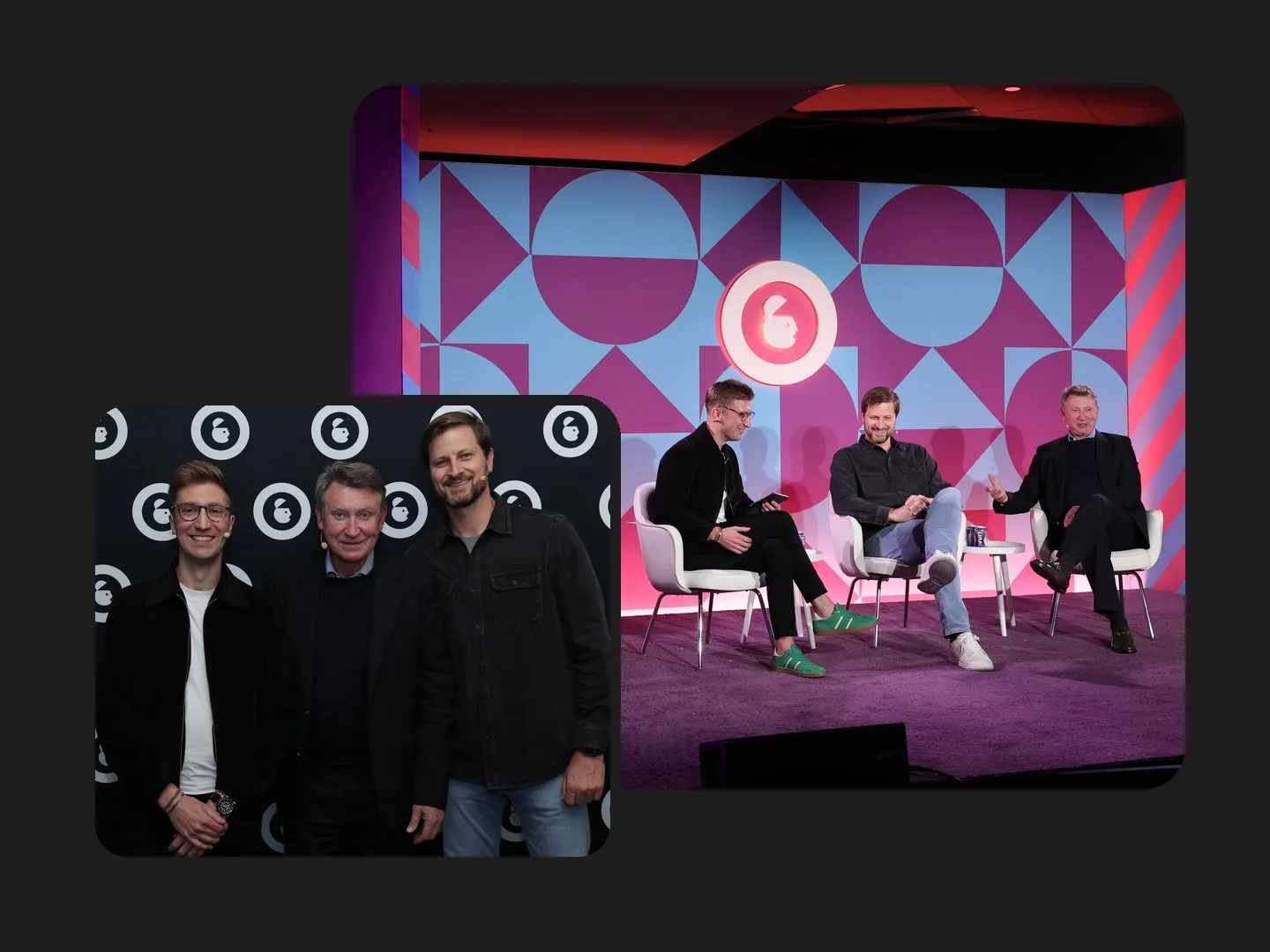
Lors de l'Advertising Week New York, Elyse Blouin de Lowe’s, Dylan Lonergan de Citi et Erica Few de Rokt ont rejoint la modératrice Kerry Flynn d'Axios pour discuter d'une opportunité croissante pour les entreprises de tous secteurs : le commerce media. Au cours de La nouvelle ligne de revenus : quelle est la valeur réelle de l'attention client, le panel a exploré comment les entreprises peuvent utiliser leurs relations clients, leurs données propriétaires et les moments de forte intention pour créer de nouvelles opportunités de revenus.

À mesure que le commerce media s'étend au-delà du commerce de détail traditionnel, les entreprises trouvent davantage de moyens de connecter les marques aux clients à des moments pertinents tout au long de leur parcours. La discussion a souligné comment la compréhension de l'intention client, l'utilisation de décisions basées sur l'IA pour offrir des expériences pertinentes et la mesure des résultats incrémentaux peuvent aider les entreprises à tirer une plus grande valeur de ces interactions.

Des données transactionnelles à la compréhension des besoins futurs

Le commerce media s'appuie sur les fondements du retail media en utilisant des signaux provenant des marchands, des catégories et des interactions clients pour mieux anticiper les besoins futurs des consommateurs.

Pour Citi, cela signifie utiliser l'intelligence transactionnelle prédictive pour identifier des modèles d'achat qui ne sont pas immédiatement évidents. 

« Les acheteurs de voitures ont une plus forte propension à devenir de nouveaux propriétaires d'animaux de compagnie », a expliqué Dylan. « Si vous pensez à la restauration rapide (QSR), il est logique de proposer des offres à un client qui y effectue des transactions régulières. Mais les amateurs de fitness sont également des clients à forte propension pour la restauration rapide. »

Lowe’s utilise ses connaissances clients différemment. Elyse a expliqué comment les programmes de fidélité de l'entreprise aident à distinguer les propriétaires faisant du bricolage (DIY) et recherchant des projets plus importants des clients professionnels effectuant des achats répétés plus fréquents. Comprendre ces comportements permet à Lowe’s de proposer du contenu, de l'inspiration et des offres pertinents tout au long du parcours de chaque client.

Les données dont disposent ces entreprises sont riches. La question la plus difficile est de savoir quoi en faire au moment opportun, et c'est là que la prise de décision entre en jeu. 

Utiliser l'IA pour offrir une pertinence en temps réel

Erica a expliqué comment Rokt utilise l'IA et l'apprentissage automatique pour évaluer les signaux propriétaires et déterminer quelles offres sont les plus pertinentes pour les clients en temps réel. À travers le Transaction Moment™, cette approche connecte les clients avec des marques et des offres qui complètent leur activité, y compris des opportunités qu'ils n'auraient peut-être pas recherchées activement.

Il est important de noter que la pertinence signifie également savoir quand ne pas faire de publicité. Comme l'a souligné Erica, il y a une « puissance dans la suppression d'une expérience publicitaire » lorsqu'une offre n'est pas adaptée au client.

Dylan a renforcé cette approche, expliquant que l'objectif de Citi n'est pas d'introduire de la publicité sur chaque propriété disponible, mais d'utiliser l'intelligence prédictive pour identifier les moments où un message peut réellement apporter de la valeur. Pour les entreprises développant des réseaux de commerce media, cette distinction est essentielle pour maintenir la confiance des clients tout en créant de nouvelles opportunités de revenus.

Prouver la valeur au-delà de l'impression

La publicité pertinente crée une opportunité, mais c'est la démonstration de l'impact incrémental qui rend le commerce media précieux pour les annonceurs.

Elyse a expliqué comment Lowe’s travaille avec un partenaire de mesure tiers pour évaluer l'efficacité publicitaire à travers les expériences numériques et en magasin. Cela donne aux annonceurs une vision plus claire de la manière dont leur investissement génère des résultats commerciaux, plutôt que de se fier uniquement aux mesures publicitaires traditionnelles.

Citi a investi de la même manière dans des capacités de mesure qui connectent l'exposition publicitaire aux transactions entre les marchands et les catégories. Dylan a expliqué que l'entreprise a passé plusieurs années à affiner son approche de mesure avant de lancer son offre de commerce media sur le marché, soulignant l'importance de prouver la performance dès le départ.

Bien que l'incrémentalité reste essentielle, Elyse a encouragé le secteur à adopter une vision plus large des problèmes commerciaux que les annonceurs cherchent à résoudre.

La prochaine étape consiste à aller au-delà de l'incrémentalité. Il s'agit de réfléchir aux problèmes commerciaux que nous résolvons pour nos annonceurs, puis de définir l'ensemble des indicateurs de performance sur lesquels nous devons être prêts à communiquer,

a expliqué Elyse.

Erica a partagé ce point de vue, soulignant la manière dont Rokt mesure la performance au-delà de la conversion initiale afin de comprendre la valeur client à long terme.

Nous ne nous concentrons pas uniquement sur ce premier événement de conversion ; nous réfléchissons et cherchons réellement à comprendre quels sont les événements ultérieurs susceptibles de générer la plus grande valeur vie pour le client,
a expliqué Erica.

La discussion a mis en lumière la façon dont une compréhension plus approfondie de l'intention du client, des expériences pertinentes et une mesure démontrant des résultats commerciaux significatifs façonneront l'avenir du commerce média. À mesure que de nouveaux secteurs investissent cet espace, ces capacités aideront les entreprises à créer davantage de valeur pour leurs clients et leurs annonceurs, tout en développant de nouvelles sources de revenus durables.

Read the full panel transcript

The New Revenue Line: What Customer Attention Is Actually Worth

Advertising Week New York | October 6, 2026

Panelists: Elyse Blouin, Lowe's; Dylan Lonergan, Citi; Erica Brophy Few, Rokt

Moderator: Kerry Flynn, Axios

Kerry Flynn: Why are we all about commerce media these days? Dylan, you wanna kick us off?

Dylan Lonergan: Sure. Hi, everybody. I'm Dylan Lonergan, head of sales for Citi Commerce Media. I think what's fundamentally changed is the value proposition of retail media is so self-evident. The ability to own the shelf, tie back SKU-level data to transactions.

And I think commerce media really just expands that value proposition. I don't know that it's fundamentally changed. We've just realized the value of being able to measure retail media and media networks in general relative to maybe legacy media. And so now commerce media gives us the ability to look cross-retailer, cross-merchant, cross-category, and importantly, tie back to actual transactions.

Erica Brophy Few: I think one of the key differentiators when I think about the shift from retail media to commerce media is retail really starts with, or was born out of, the context of purchase, what's in the cart. Whereas commerce media is focused more on the context of the individual.

We've been able to zoom out more and understand the cross-merchant, cross-transaction view and really give the customer more dimensions.

Elyse Blouin: I think retail media really proved that there was value there from an advertiser perspective, and commerce media is broader. It's no longer just about the placements from a media perspective. It's no longer just about on-site placements, off-site placements.

Commerce media is really about being connected at all of the points of relevance for the customer. It's more full funnel. It's more about brand experiences and really making sure that the advertising is performant for the advertiser, but also beneficial for the customer.

Dylan Lonergan: I think what's so powerful about Citi is a couple of different things. One, 210 years of customer trust. And in that, we also have a breadth of data available to us beyond just a transaction.

One example that comes to mind is our ability to understand where customers are going to go next through things like predictive transactional intelligence.

Auto buyers have a higher propensity to be new pet owners, or if you think QSR, certainly if I transacted at a QSR very regularly, that makes sense to potentially serve a QSR customer. But workout enthusiasts are also high-propensity QSR customers.

Our ability to look more holistically at individuals at a one-to-one level, add breadth and depth of data, and then understand where folks are gonna go next, and then be able to provide them a high-intent moment.

Elyse Blouin: I would say that the customer is still at the core of what is important in retail media. The transaction data and the propensity data that Dylan talked about is definitely something that we need to lean into as an industry.

I think measurement is critical in this space, so making sure that we can communicate the benefit of what we're doing from an advertising perspective and prove that it's incremental is more and more important.

Erica Brophy Few: When I think about the evolution of Rokt, where we started was the more traditional retailer, that transaction moment where there is that add-to-cart flow. Where we now sit has really begun to shift to also include the likes of financial services partners.

With that shift, there's going to be more partners that become more applicable to what we do as a company, which is bringing that relevant ad experience to that moment when customers are completing their main transaction or main activity with that partner.

Elyse Blouin: One of the key things about Lowe's is that we have both a pro and a DIY loyalty program, and so we are able to determine if you are a homeowner or a pro customer.

The signals within those customers are very different. If you think about a homeowner, you're probably doing a lot of research, you're probably engaging in a bigger project.

On the pro side, they're shopping more frequently, and they're buying similar products. It's really important for us to understand those different patterns with different customers to engage with them differently.

Erica Brophy Few: When it comes to data, at Rokt, we have what we call the Rokt Brain, and it is really our secret sauce to how we drive relevance for customers.

We're able to take all the different data points that we have, based on first-party signals that we're getting from partners, the first-party signals that we're getting from advertisers, as well as those data points that we've gathered by understanding who is engaging with what placements.

Being able to take that all in and leverage the power of AI and machine learning to ultimately figure out what is the right combination in real time for that customer makes the ad work.

Dylan Lonergan: When you're sitting on so much data, as a media network, fundamentally, it has to start with the customer. And if we start with the customer, that enables us to discern what data is most relevant to that customer.

We're trying to marry adding value to cardholders and customers, because if we can do that, we can then deliver marketing outcomes on the back end.

One of the biggest things is we're not trying to create more advertising. We want to be highly relevant in adding value.

Erica Brophy Few: From a measurement standpoint, when you think about Rokt, we are a performance network at the end of the day. We are here to drive results for advertisers, leaning into whatever that downstream event is.

We also focus not just on that first conversion event, but really thinking about and understanding what those downstream events are that can drive the most lifetime value for the customer.

Elyse Blouin: We leverage a third-party accredited partner to build bespoke MTA and MMM models for each of our advertisers. We feel like that's important because we're not grading our own homework.

We also want to make sure that we are closing the loop on all of our ad placements, not just on-site, not just in digital, but our stores are really valuable and important resources to us as well.

Erica Brophy Few: One of the things that we find very important is it's not always the right time to show an ad. And part of that is also part of the experience where there's power in suppressing an ad experience just as there is the power of matching the right offer to the user.

Elyse Blouin: The next evolution is beyond incrementality. It's thinking about what are those business problems that we're solving for our advertisers, and then what are the suite of KPIs that we need to be prepared to report on.

Thinking beyond just incrementality, but thinking about customer lifetime value or new to brands and all of these different metrics that really tell the full story of what we're doing for the partner is going to be really important.

Erica Brophy Few: One of the things that we also prioritize is always going to be that customer value and customer experience.

When we're thinking about what is the right thing to show, it's not always what is the most valuable and what's going to drive the most revenue for the partner, but we're always putting the customer in that front seat decision where it's what is going to be the most valuable for them.

Dylan Lonergan: There's so many media networks today, and we all have a different view of the potential customer. I think what we're really focused on is ways we can create synergies across the ecosystem.

Working with Elyse, working with Erica and the Rokt team, working with the broader ecosystem to help reduce some of that friction and ideally continue to elevate the category.

Erica Brophy Few: One of the things that I'm excited for is the new shapes of the partnerships that we're able to take on and how we're starting to work with not just your standard retailer, but more of the tech players in the space and other businesses that have maybe a more B2B-to-B2C sort of relationship.

Elyse Blouin: The industry is still evolving. It's new. It's changing every day. And so what I get excited about is developing talent in the industry. What are the future leaders of retail media that we can work together to develop now?

Kerry Flynn: Thank you so much to my lovely panelists, and thank you all for listening. Enjoy the rest of Advertising Week.