


A grocery customer opens an app to get the shopping done. The grocer has several goals to meet along the way.
A merchandising team wants to support a category, a brand wants its campaign seen, a loyalty team wants to encourage another visit, and the ecommerce team wants the customer to complete the order. Across the app, website, and store, the challenge is deciding which interaction will create the most value for the shopper and the business at the moment.
Those decisions matter especially when customers are focused on managing costs. In a July 2026 Bain & Company study cited at Groceryshop, 80% of Americans said they were trying to cut spending, and more than one in four were actively trying to spend less on groceries. Every offer or message needs to earn its place in that shopping experience.
At the same time, commercial expectations for these touchpoints are increasing. At Groceryshop 2026, a Shoptalk grocery pulse survey found that 58% of brand executives expect placements on grocers’ websites, apps, and in-store displays to matter significantly more over the next one to five years. As those placements grow in importance, grocers face a practical question. How do they manage the experience around them?
My view is that relevance needs to become a shared business discipline. Every interaction deserves a clear purpose, informed by the shopper’s needs and weighed against the grocer’s wider priorities.
Give every interaction a clear purpose
The first step is to define what an interaction should help the shopper do, and how that supports the grocer’s objectives.
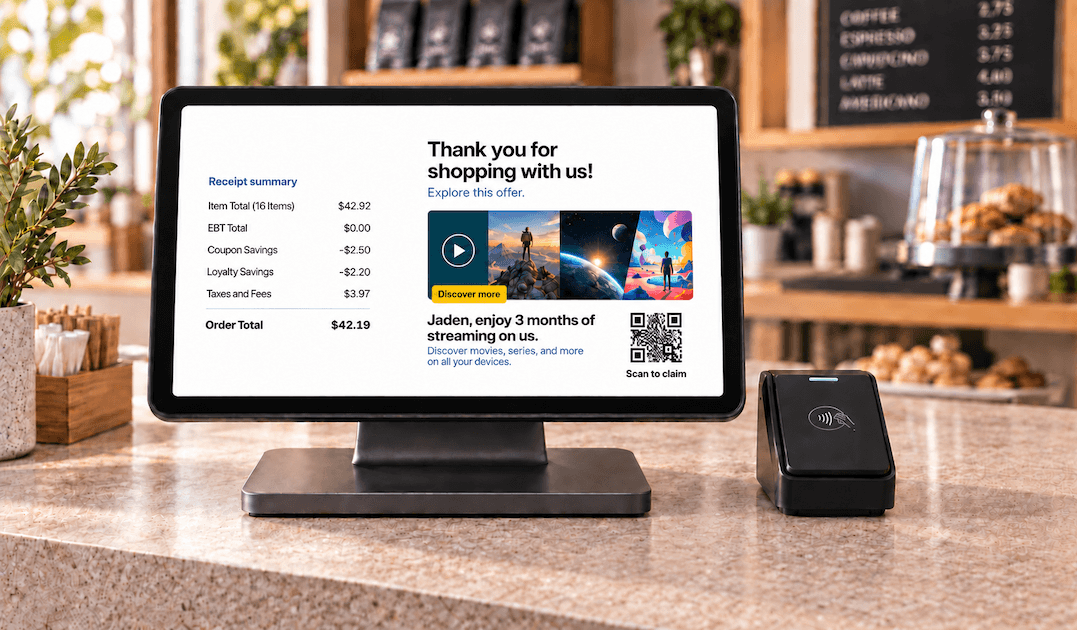
Someone comparing products may welcome information that helps them choose. Someone reviewing a basket may be focused on the total cost and whether they have everything they need. Someone who’s completed an order needs clear confirmation and confidence about what happens next.
These are different tasks and the same campaign can be useful in one context and distracting in another.
Grocers should define what useful engagement looks like in each context before deciding which commercial messages belong there.
To put this into practice, grocers need to make explicit choices about how shopper needs, advertiser demand, and business priorities fit together. A campaign may be commercially attractive, but the team still has to explain why its placement makes sense for the customer.
Technology’s role is to apply those choices consistently. A grocer can set eligibility rules, commercial priorities, and limits on competing messages, then evaluate the experience against them.
The leadership responsibility is to define what the business values, and to accept that sometimes the most relevant choice is to show nothing at all.
Turn shopper data into useful decisions
Once grocers have defined what an interaction should achieve, first-party shopper data can help determine which campaign or offer best serves that purpose.
A previous purchase can indicate preferences. The customer’s current basket, selected store, and available products help establish whether an offer is useful and actionable now. These signals become more valuable when considered together.
Picture a sponsored product that’s out of stock at the store a shopper picked for curbside pickup. However well it matches their purchase history, it’s the wrong thing to show. A relevant recommendation needs to account for product availability, offer conditions, and what the customer is trying to accomplish.
Teams should identify the information needed to make each choice, subject to the permissions and controls governing its use. That requires collaboration: merchandising brings knowledge of products and availability, ecommerce provides context about the shopping journey, retail media contributes campaign objectives, and data teams help connect those inputs.
Together, these inputs help teams move from knowing what a shopper has bought before to understanding which offers are relevant to their current shopping situation.
Manage the experience as one business
An offer can be relevant on its own and still contribute to a repetitive or confusing shopping experience. Grocers therefore need to consider how individual campaign decisions work together across the full customer journey.
Grocers can set shared rules for how campaigns and offers work together across their apps, websites, and stores. Those rules can address repetition, conflicting promotions, and the role of each interaction in the wider journey. They also need a way to resolve competing demands when several teams want the same customer’s attention.
Measurement needs the same breadth. Start with how shoppers respond, through purchase completion, offer use, feedback, and repeat visits. Then look at the media revenue and margin those experiences create. Controlled tests can show whether a change creates additional value or simply moves cost elsewhere in the journey.
Bringing commercial decisions and customer experience into the same conversation is the real opportunity. A shared view of success gives teams a basis for trade-offs and gives technology a clearer framework for applying those decisions.
For grocery leaders, the work can start with a single shopping journey and an honest look at what appears in it and why.
As retail media grows, grocers can set the standard for how it belongs in the shopping experience. Relevance gives them that standard. Every interaction, from the first search to the order confirmation, should earn its place through the value it creates for the shopper, the advertiser, and the business.
Rokt helps grocers and retailers bring real-time relevance to every step of the Transaction Moment™, from selection to confirmation.