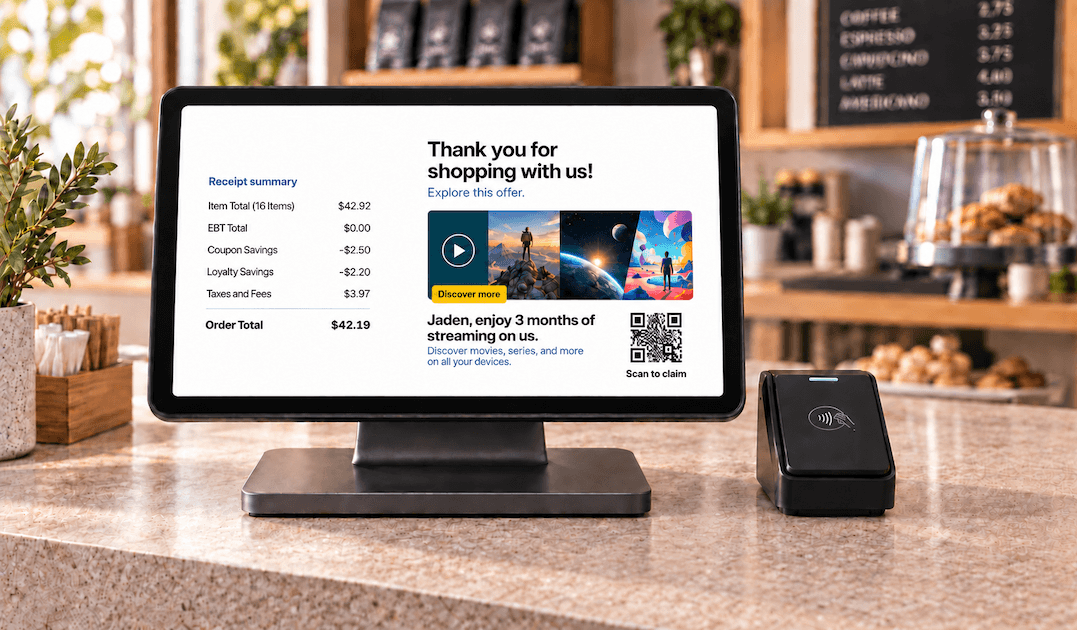


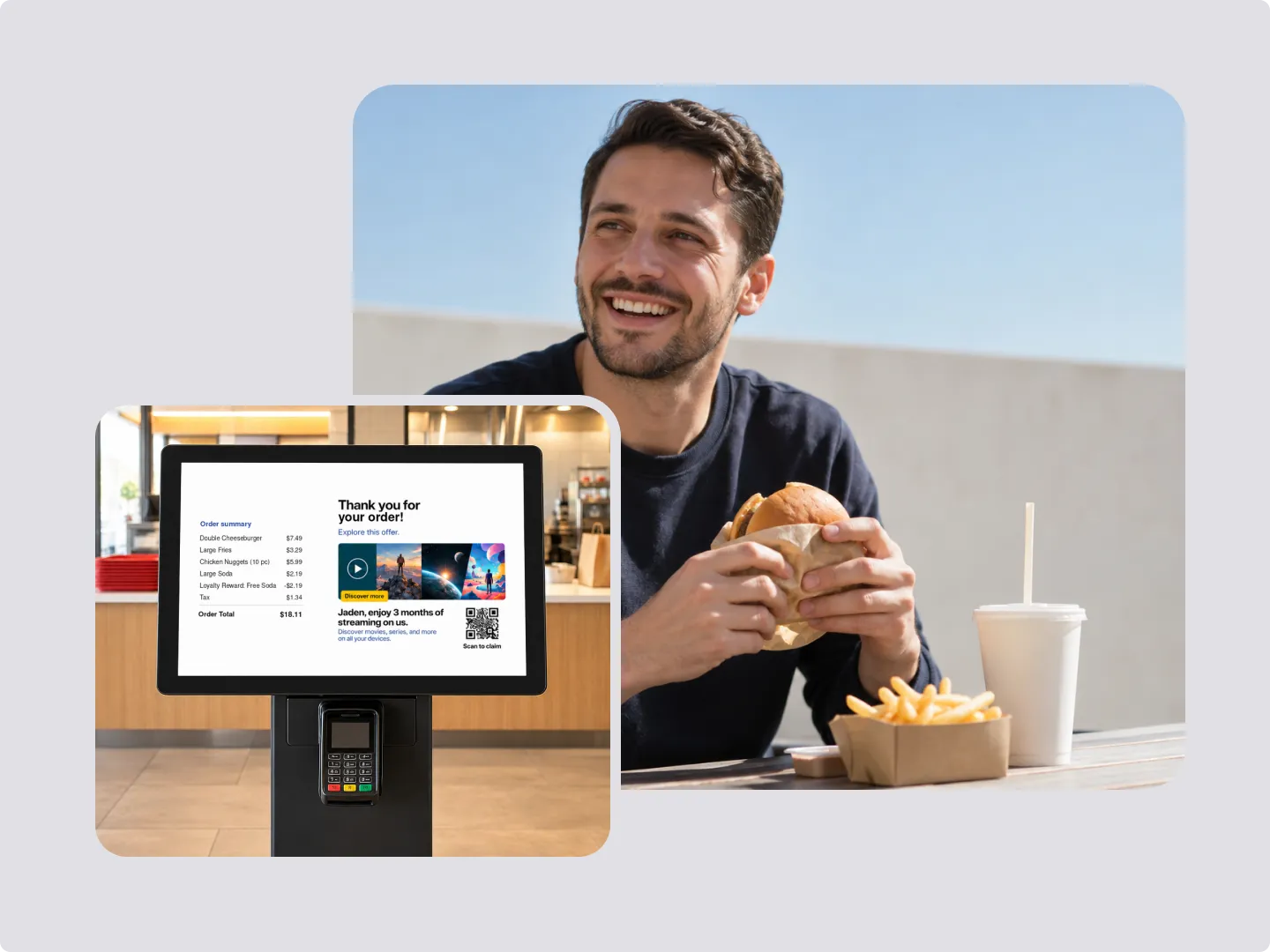
A guest finishes ordering at a restaurant kiosk. Their meal is paid for. They check the confirmation, look for their order number, and prepare to collect their food. On most kiosks today, that is where the interaction ends.
It’s an unused moment at a time when the industry can’t afford unused moments. The Restaurant365 midyear report found 87% of QSR operators saw higher food costs in the first half of 2026, and Placer.ai reported QSR traffic down 4.4% year-over-year in May. To offset these margin pressures, operators are looking at the assets they already own, starting with in-store screens. That’s where Rokt is working to extend the real-time relevance it already delivers on online QSR order confirmation pages, now to the kiosk screens restaurants already own. For QSR operators, the harder question is what belongs on the kiosk screen, and who decides.
For the operator, that brief interaction carries several priorities at once. The kiosk needs to keep service moving, strengthen loyalty, encourage another visit, and generate more value from the transaction. Each priority has a legitimate claim on the experience, but what deserves the guest’s attention once the order is complete?
The answer should start with the restaurant relationship. A useful interaction needs to fit the visit, respect the customer’s time, and do real work for the business. That is the standard that determines how much commercial value the kiosk experience can sustain.
Relevance should support the next visit
Repeat business is a practical test of whether a restaurant is giving customers reasons to return. Food, value, convenience, and service all contribute. Any additional message should fit within that experience.
A customer collecting a quick lunch between meetings and a customer placing a larger order for a group have both completed a purchase, but their needs and willingness to engage are different. The in-store experience should account for that.
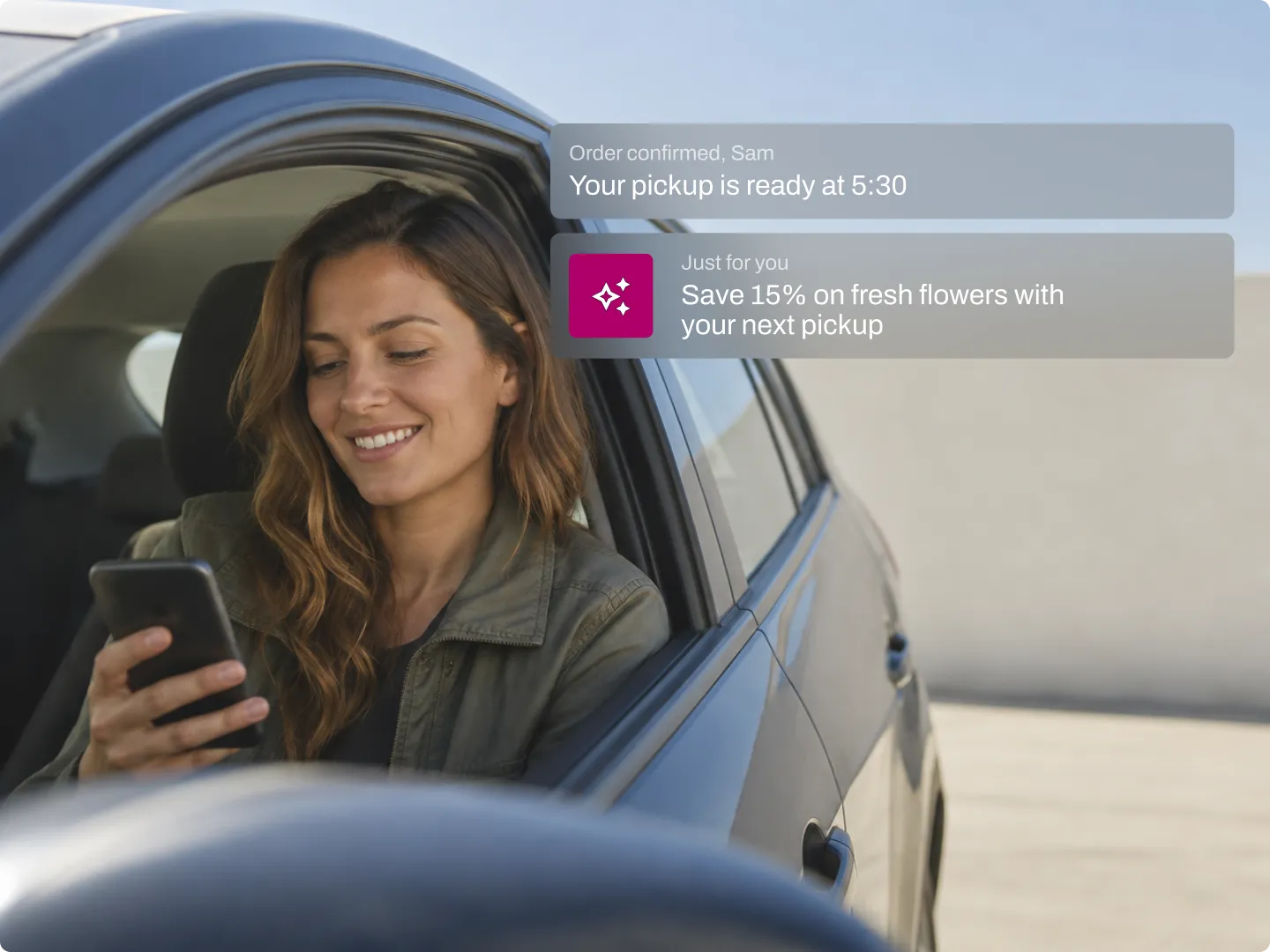
A loyalty invitation might help a frequent customer begin earning benefits. A restaurant promotion could give someone a reason to plan another visit. A relevant third-party offer, such as a streaming subscription discount for a guest carrying a family dinner home, can add real value after the purchase. In most cases, one highly relevant offer is more effective than several that compete for attention.
Each of these interactions does something different. The role of each matters, and so does how each supports the guest relationship.That is the standard Rokt is designing its in-store experience around. An offer belongs on the kiosk only when it adds something for that guest at that moment.
A completed order is an opportunity to reinforce the restaurant’s relationship with the guest. The offer that appears next should strengthen that relationship, or stay off the screen.
The customer experience sets the commercial limits
A kiosk is part of restaurant operations. Guests depend on it to place an accurate order, complete payment, and understand what happens next. Any additional engagement has to respect that purpose.
The order is the primary thing. Guests need to see their confirmation, understand what happens next, and leave when they’re ready. An offer appears as an extension of that moment, after the transaction completes, with the same principles governing it. Rokt is building its in-store experience to complement checkout, with built-in safeguards that protect the speed and quality of the flow.
The same discipline applies to managing competing priorities. As more teams see the screen’s potential, loyalty, marketing, partnerships, and operations will each want space on it. Allocating that space requires agreement on which objective takes priority, and when.
For QSR leaders, that makes in-store relevance a decisioning problem. The best choice at any given moment is one highly relevant offer, or nothing at all.
Those decisions should reflect the operator’s commercial goals and the customer’s immediate needs. Filling every available placement is a weak substitute for knowing what will be useful. Making that call across thousands of orders a day, restaurant by restaurant, is where machine learning earns its place. Online, that work is done by the Rokt Brain, refined over 13 years of machine learning and applied across 13 billion+ transactions annually. Rokt is now extending that same intelligence to the physical checkout.
Three questions sit underneath every kiosk program decision. Who makes the call on what appears. How relevance gets measured. What shows when nothing fits.
Control over the experience is therefore part of the business case. Operators need confidence that a new revenue opportunity will work within the standards they have set for their brand. Rokt’s in-store approach keeps those standards with the operator. Advertiser and category controls determine what can appear, Rokt uses only the first-party identifiers a restaurant chooses to activate and the guest relationship remains the restaurant’s.
New revenue needs a complete business case
Third-party offers introduce a potential revenue stream from transactions a restaurant already serves, generating incremental profit without adding labor or operational overhead. Rokt is designing its in-store experience to run on the screens restaurants already have, with no new hardware or fixtures, and to connect them to the same premium advertiser network behind its online confirmation experience. Operators won’t need to build their own advertiser demand or recruit brands onto the kiosk.
The larger opportunity for QSR is to make interactions a restaurant already has, work harder for the business. A completed order can support a useful benefit, a future visit, or an additional revenue stream when the experience is designed around a clear purpose.
Rokt is extending relevance into the restaurant on that principle. The most relevant offer for each guest, decided in real time on screens the operator already owns, with operators keeping full control over their brand experience. For QSR leaders, the question is what each interaction should contribute to the customer relationship, and whether it belongs on the screen at all. The kiosk screen is already there. What appears on it should be a deliberate operator choice, not a vendor default.