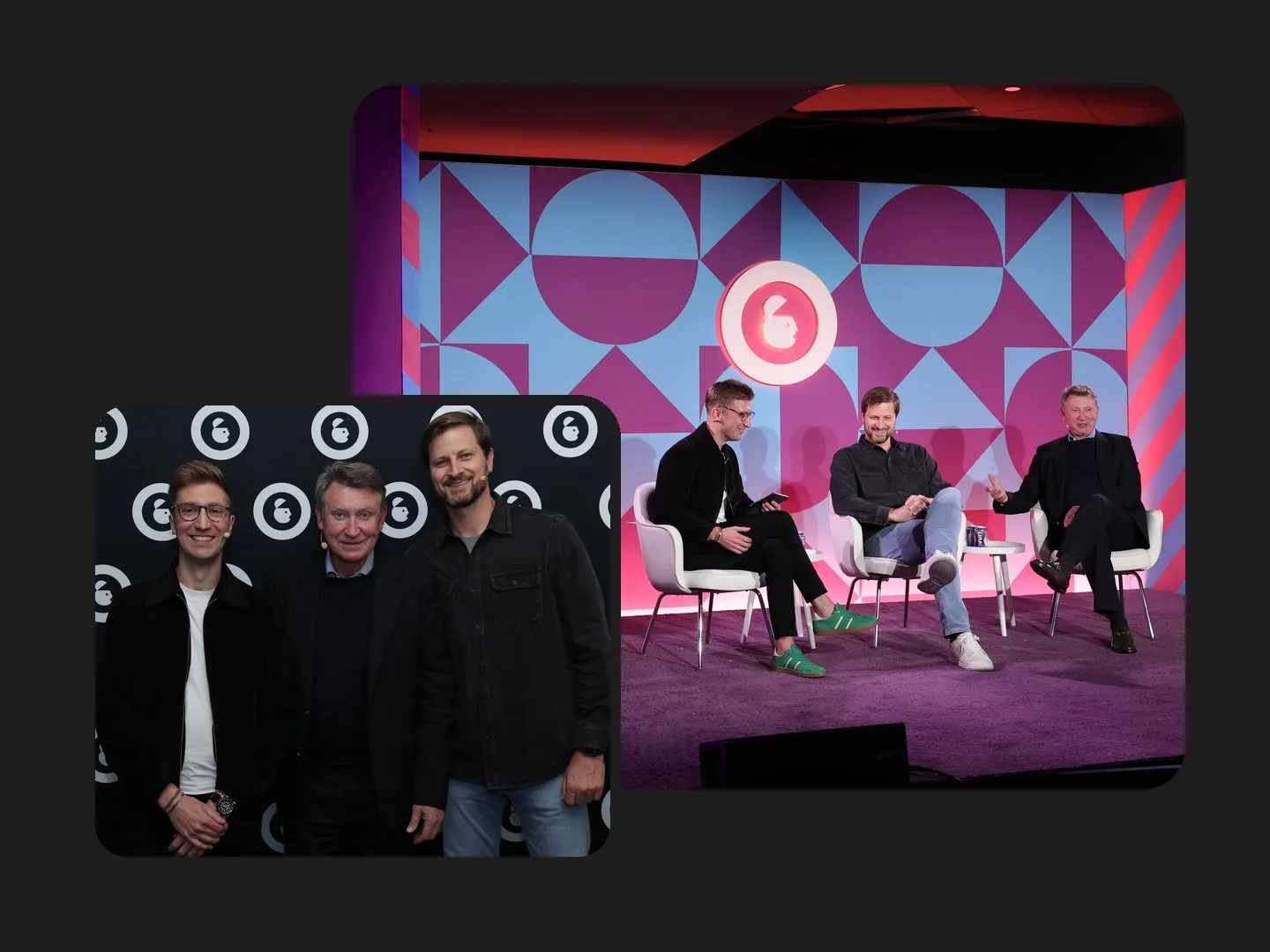
En la Advertising Week de Nueva York, Elyse Blouin de Lowe’s, Dylan Lonergan de Citi y Erica Few de Rokt se unieron a la moderadora Kerry Flynn de Axios para debatir sobre una oportunidad creciente para las empresas de todos los sectores: el commerce media. Durante La nueva línea de ingresos: cuánto vale realmente la atención del cliente, el panel exploró cómo las empresas pueden utilizar sus relaciones con los clientes, los datos de origen (first-party data) y los momentos de alta intención para crear nuevas oportunidades de ingresos.

A medida que el commerce media se expande más allá del retail tradicional, las empresas encuentran más formas de conectar a las marcas con los clientes en momentos relevantes a lo largo de sus recorridos. El debate destacó cómo comprender la intención del cliente, utilizar la toma de decisiones basada en IA para ofrecer experiencias relevantes y medir los resultados incrementales puede ayudar a las empresas a obtener un mayor valor de estas interacciones.

De los datos de transacciones a la comprensión de lo que sigue

El commerce media se basa en los fundamentos del retail media al utilizar señales de comerciantes, categorías e interacciones con los clientes para comprender mejor qué pueden necesitar los consumidores a continuación.

Para Citi, esto significa utilizar inteligencia transaccional predictiva para identificar patrones de compra que pueden no ser evidentes de inmediato. 

"Los compradores de automóviles tienen una mayor propensión a ser nuevos dueños de mascotas", explicó Dylan. "Si piensas en el sector de comida rápida (QSR), ciertamente si realicé una transacción en un QSR con mucha regularidad, tiene sentido servir potencialmente a un cliente de QSR. Pero los entusiastas del ejercicio también son clientes de QSR con alta propensión".

Lowe’s utiliza sus conocimientos sobre los clientes de forma diferente. Elyse explicó cómo los programas de fidelización de la empresa ayudan a distinguir entre los propietarios de viviendas que hacen sus propias reformas (DIY) y que investigan proyectos más grandes, y los clientes profesionales que realizan compras repetidas con mayor frecuencia. Comprender estos comportamientos permite a Lowe’s ofrecer contenido, inspiración y ofertas relevantes a lo largo del recorrido de cada cliente.

Los datos que poseen estas empresas son valiosos. La pregunta más difícil es qué hacer con ellos en el momento adecuado, que es donde entra en juego la toma de decisiones. 

Uso de la IA para ofrecer relevancia en tiempo real

Erica explicó cómo Rokt utiliza la IA y el aprendizaje automático para evaluar las señales de origen y determinar qué ofertas son más relevantes para los clientes en tiempo real. A través del Transaction Moment™, este enfoque conecta a los clientes con marcas y ofertas que complementan su actividad, incluidas oportunidades que quizás no estaban buscando activamente.

Es importante destacar que la relevancia también significa saber cuándo no hacer publicidad. Como señaló Erica, existe "poder en suprimir una experiencia publicitaria" cuando una oferta no es adecuada para el cliente.

Dylan reforzó este enfoque, explicando que el objetivo de Citi no es introducir publicidad en todas las propiedades disponibles, sino utilizar la inteligencia predictiva para identificar momentos en los que un mensaje puede aportar valor genuino. Para las empresas que desarrollan redes de commerce media, esa distinción es fundamental para mantener la confianza del cliente mientras se crean nuevas oportunidades de ingresos.

Demostrar el valor más allá de la impresión

La publicidad relevante crea una oportunidad, pero demostrar el impacto incremental es lo que hace que el commerce media sea valioso para los anunciantes.

Elyse habló sobre cómo Lowe’s trabaja con un socio de medición externo para evaluar la eficacia publicitaria en experiencias digitales y en tienda. Esto ofrece a los anunciantes una visión más clara de cómo su inversión impulsa los resultados comerciales, en lugar de depender únicamente de las métricas de medios tradicionales.

Citi ha invertido de manera similar en capacidades de medición que conectan la exposición publicitaria con las transacciones en diferentes comercios y categorías. Dylan explicó que la empresa pasó varios años perfeccionando su enfoque de medición antes de lanzar su oferta de commerce media al mercado, lo que subraya la importancia de demostrar el rendimiento desde el principio.

Aunque la incrementalidad sigue siendo fundamental, Elyse animó al sector a pensar de forma más amplia sobre los problemas empresariales que los anunciantes intentan resolver.

La próxima evolución va más allá de la incrementalidad. Se trata de pensar en cuáles son esos problemas empresariales que estamos resolviendo para nuestros anunciantes y, a continuación, en cuál es el conjunto de KPI sobre los que debemos estar preparados para informar,

explicó Elyse.

Erica se hizo eco de esa perspectiva, destacando cómo Rokt mide el rendimiento más allá de la conversión inicial para comprender el valor del cliente a largo plazo.

También nos centramos no solo en ese primer evento de conversión, sino en pensar y comprender realmente cuáles son esos eventos posteriores que pueden generar el mayor valor de vida útil para el cliente,
explicó Erica.

La conversación puso de relieve cómo una comprensión más profunda de la intención del cliente, las experiencias relevantes y una medición que demuestre resultados empresariales significativos darán forma al futuro de los medios de comercio. A medida que más sectores se introduzcan en este espacio, estas capacidades ayudarán a las empresas a crear un mayor valor para los clientes y los anunciantes, al tiempo que construyen nuevas fuentes de ingresos sostenibles.

Read the full panel transcript

The New Revenue Line: What Customer Attention Is Actually Worth

Advertising Week New York | October 6, 2026

Panelists: Elyse Blouin, Lowe's; Dylan Lonergan, Citi; Erica Brophy Few, Rokt

Moderator: Kerry Flynn, Axios

Kerry Flynn: Why are we all about commerce media these days? Dylan, you wanna kick us off?

Dylan Lonergan: Sure. Hi, everybody. I'm Dylan Lonergan, head of sales for Citi Commerce Media. I think what's fundamentally changed is the value proposition of retail media is so self-evident. The ability to own the shelf, tie back SKU-level data to transactions.

And I think commerce media really just expands that value proposition. I don't know that it's fundamentally changed. We've just realized the value of being able to measure retail media and media networks in general relative to maybe legacy media. And so now commerce media gives us the ability to look cross-retailer, cross-merchant, cross-category, and importantly, tie back to actual transactions.

Erica Brophy Few: I think one of the key differentiators when I think about the shift from retail media to commerce media is retail really starts with, or was born out of, the context of purchase, what's in the cart. Whereas commerce media is focused more on the context of the individual.

We've been able to zoom out more and understand the cross-merchant, cross-transaction view and really give the customer more dimensions.

Elyse Blouin: I think retail media really proved that there was value there from an advertiser perspective, and commerce media is broader. It's no longer just about the placements from a media perspective. It's no longer just about on-site placements, off-site placements.

Commerce media is really about being connected at all of the points of relevance for the customer. It's more full funnel. It's more about brand experiences and really making sure that the advertising is performant for the advertiser, but also beneficial for the customer.

Dylan Lonergan: I think what's so powerful about Citi is a couple of different things. One, 210 years of customer trust. And in that, we also have a breadth of data available to us beyond just a transaction.

One example that comes to mind is our ability to understand where customers are going to go next through things like predictive transactional intelligence.

Auto buyers have a higher propensity to be new pet owners, or if you think QSR, certainly if I transacted at a QSR very regularly, that makes sense to potentially serve a QSR customer. But workout enthusiasts are also high-propensity QSR customers.

Our ability to look more holistically at individuals at a one-to-one level, add breadth and depth of data, and then understand where folks are gonna go next, and then be able to provide them a high-intent moment.

Elyse Blouin: I would say that the customer is still at the core of what is important in retail media. The transaction data and the propensity data that Dylan talked about is definitely something that we need to lean into as an industry.

I think measurement is critical in this space, so making sure that we can communicate the benefit of what we're doing from an advertising perspective and prove that it's incremental is more and more important.

Erica Brophy Few: When I think about the evolution of Rokt, where we started was the more traditional retailer, that transaction moment where there is that add-to-cart flow. Where we now sit has really begun to shift to also include the likes of financial services partners.

With that shift, there's going to be more partners that become more applicable to what we do as a company, which is bringing that relevant ad experience to that moment when customers are completing their main transaction or main activity with that partner.

Elyse Blouin: One of the key things about Lowe's is that we have both a pro and a DIY loyalty program, and so we are able to determine if you are a homeowner or a pro customer.

The signals within those customers are very different. If you think about a homeowner, you're probably doing a lot of research, you're probably engaging in a bigger project.

On the pro side, they're shopping more frequently, and they're buying similar products. It's really important for us to understand those different patterns with different customers to engage with them differently.

Erica Brophy Few: When it comes to data, at Rokt, we have what we call the Rokt Brain, and it is really our secret sauce to how we drive relevance for customers.

We're able to take all the different data points that we have, based on first-party signals that we're getting from partners, the first-party signals that we're getting from advertisers, as well as those data points that we've gathered by understanding who is engaging with what placements.

Being able to take that all in and leverage the power of AI and machine learning to ultimately figure out what is the right combination in real time for that customer makes the ad work.

Dylan Lonergan: When you're sitting on so much data, as a media network, fundamentally, it has to start with the customer. And if we start with the customer, that enables us to discern what data is most relevant to that customer.

We're trying to marry adding value to cardholders and customers, because if we can do that, we can then deliver marketing outcomes on the back end.

One of the biggest things is we're not trying to create more advertising. We want to be highly relevant in adding value.

Erica Brophy Few: From a measurement standpoint, when you think about Rokt, we are a performance network at the end of the day. We are here to drive results for advertisers, leaning into whatever that downstream event is.

We also focus not just on that first conversion event, but really thinking about and understanding what those downstream events are that can drive the most lifetime value for the customer.

Elyse Blouin: We leverage a third-party accredited partner to build bespoke MTA and MMM models for each of our advertisers. We feel like that's important because we're not grading our own homework.

We also want to make sure that we are closing the loop on all of our ad placements, not just on-site, not just in digital, but our stores are really valuable and important resources to us as well.

Erica Brophy Few: One of the things that we find very important is it's not always the right time to show an ad. And part of that is also part of the experience where there's power in suppressing an ad experience just as there is the power of matching the right offer to the user.

Elyse Blouin: The next evolution is beyond incrementality. It's thinking about what are those business problems that we're solving for our advertisers, and then what are the suite of KPIs that we need to be prepared to report on.

Thinking beyond just incrementality, but thinking about customer lifetime value or new to brands and all of these different metrics that really tell the full story of what we're doing for the partner is going to be really important.

Erica Brophy Few: One of the things that we also prioritize is always going to be that customer value and customer experience.

When we're thinking about what is the right thing to show, it's not always what is the most valuable and what's going to drive the most revenue for the partner, but we're always putting the customer in that front seat decision where it's what is going to be the most valuable for them.

Dylan Lonergan: There's so many media networks today, and we all have a different view of the potential customer. I think what we're really focused on is ways we can create synergies across the ecosystem.

Working with Elyse, working with Erica and the Rokt team, working with the broader ecosystem to help reduce some of that friction and ideally continue to elevate the category.

Erica Brophy Few: One of the things that I'm excited for is the new shapes of the partnerships that we're able to take on and how we're starting to work with not just your standard retailer, but more of the tech players in the space and other businesses that have maybe a more B2B-to-B2C sort of relationship.

Elyse Blouin: The industry is still evolving. It's new. It's changing every day. And so what I get excited about is developing talent in the industry. What are the future leaders of retail media that we can work together to develop now?

Kerry Flynn: Thank you so much to my lovely panelists, and thank you all for listening. Enjoy the rest of Advertising Week.