

.jpg)
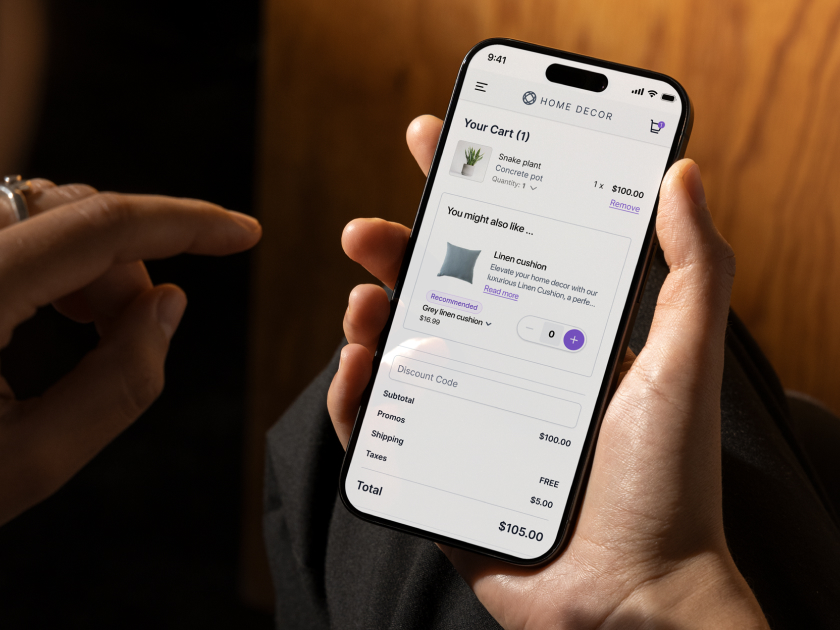
Post-purchase monetization is generating incremental revenue in the moments after a customer completes a transaction, typically on the confirmation or thank you page. The window is short, intent is high, and most ecommerce businesses leave it empty.
Offers are selected in real time based on what the customer just bought and delivered natively within the post-purchase flow. When the offer matches the customer's intent, it generates incremental revenue without disrupting the purchase experience. Common approaches include:
- Third-party offers presented on confirmation pages
- First-party upsells and cross-sells
- Loyalty, subscription, or app engagement prompts
- Payment-based incentives and rewards
- Add-on products or services delivered in real time
Email, SMS, and retargeting extend this further into the customer lifecycle but operate well outside the peak-intent window of checkout. Post-purchase monetization is defined by timing: it captures customers when they are already decided, not when they are still considering.
Why does the confirmation page matter more than ever?
Most ecommerce investment goes into getting customers to convert. Very little goes into what happens once they complete checkout.
That gap is getting more expensive to ignore. WordStream's analysis of more than 16,000 Google Ads campaigns found that average cost per click in paid search rose nearly 13 percent year-over-year in 2025, continuing five consecutive years of increases. The industry's reliance on third-party data is eroding regardless. IAB's State of Data 2024 found that nearly 90 percent of marketers are already shifting their data mix toward first- and zero-party data, a structural change that makes the Transaction Moment, where first-party data is richest, more valuable by the year.
Post-purchase monetization runs on first-party transaction data from customers who are already converting. No new traffic required, no reliance on third-party identifiers. As acquisition costs climb and data deprecation accelerates, the economics of this surface get more favorable every year.
The evolution from ads to relevance
Early confirmation page strategies served static ads and generic upsells. The page was treated as spare inventory.
Consumers now expect experiences that reflect what they just purchased and what they actually need. Marigold's 2024 Global Consumer Trends Index, which surveyed more than 10,000 consumers across ten markets, found that 78 percent are likely to engage with a personalized offer tailored to their interests. Generic offers face a much steeper climb.
When driven by real-time transaction data and machine learning, post-purchase experiences integrate naturally into the checkout flow, use first-party data instead of third-party signals, and generate measurable lift per transaction. That shift produced the category of dedicated post-purchase monetization platforms.
How does the technology actually work?
Three components have to connect: customer context (what was purchased, transaction signals, prior behavior), decisioning logic (a system that selects the best next offer in real time), and a native placement in the confirmation flow.
In sequence:
- A customer completes a purchase.
- Real-time signals from that transaction are processed.
- The system selects the most relevant offer for that specific customer.
- The offer appears natively on the confirmation page before the customer leaves.
The whole sequence takes milliseconds. That is what separates a managed post-purchase channel from a static confirmation page.
Example: A customer who just bought running shoes might see a sports nutrition subscription, race travel insurance, or an extended warranty. Each option is selected based on that specific transaction and the behavior patterns of similar customers, not a broad category assumption.
The intelligence behind the offer
While real-time transaction signals are powerful, the highest-performing strategies combine them with zero-party data, information the customer intentionally shares.
By integrating 'micro-surveys' directly into the confirmation flow (e.g., 'Is this a gift?' or 'What is your primary fitness goal?'), platforms can refine their decisioning logic instantly. If a purchase is a gift, the system knows to suppress first-party 'subscription refills' and instead surface third-party offers for gift-related services. This transforms the confirmation page into a two-way conversation that enriches the retailer's CRM while driving immediate conversion.
Key types of post-purchase monetization
Third-party offers. Confirmation pages serve relevant offers from outside the brand's own catalog on performance-based models. Advertisers pay per action, not per view.
First-party upsells and cross-sells. Retailers surface complementary products from their own catalog immediately after purchase, increasing order value without additional acquisition spend.
Payment and incentive offers. Rewards programs, credit products, and share-of-wallet incentives are introduced at the confirmation stage, tied to the completed transaction.
Subscription and loyalty activation. Customers are prompted to join programs or download apps when they are most receptive: immediately after buying.
Distributed commerce. Third-party products are embedded directly in the confirmation experience, giving customers a path to a second purchase without the retailer carrying inventory or operational overhead.
What separates high-performing strategies
Relevance is the primary factor. Customers convert at higher rates when offers reflect their immediate transaction, not a generic category guess. Salesforce research found that 73 percent of customers felt brands treated them as unique individuals in 2024, up from 39 percent the year before, nearly double in twelve months. Yet, only 49 percent feel companies use their data in a way that actually benefits them. The gap between delivering personalization and earning credit for it is where relevance does its work.
Integration compounds this. Offers that integrate natively into the confirmation flow outperform interruptive formats. Performance-based pricing reinforces this further: advertisers pay for outcomes, which incentivizes them to bring offers that genuinely serve the customer. When those pieces align, retailers, advertisers, and customers are all working toward the same result.
How does post-purchase monetization compare to retail media, affiliate marketing and loyalty?
Post-purchase monetization is frequently grouped with retail media, affiliate marketing, email retargeting, and loyalty programs. The distinctions matter for measurement and strategy.
Post-purchase monetization is unique in operating after the purchase decision is already made, with first-party transaction data immediately available.
The role of the Transaction Moment™
Post-purchase monetization fits into a broader framework Rokt calls the Transaction Moment™, spanning from selection to confirmation. Businesses that treat this full window as a managed performance channel consistently generate more revenue per transaction than those optimizing a single placement in isolation.
What are common misconceptions about post purchase monetization?
"Post-purchase monetization hurts customer experience." Irrelevant offers do. When offers match what the customer just bought and what they are likely to need it enhances the customer experience. The problem in earlier confirmation page advertising was poor relevance, not the format.
"It cannibalizes my future sales." A common fear is that third-party offers will distract a customer from returning to the retailer. In reality, modern platforms use category suppression rules. A fashion retailer can automatically block any apparel-related offers, ensuring the "second spend" goes toward a complementary category (like travel or electronics) rather than a competitor.
"It's just another ad channel." Traditional display charges per impression. Post-purchase monetization charges per action. That changes the incentive structure for everyone in the system.
"It's limited to the confirmation page." Cart, checkout, payments, and post-purchase each carry distinct signals. The opportunity covers all of them.
What metrics matter?
The most meaningful metrics connect directly to business outcomes:
- Incremental revenue per transaction — the primary measure of channel performance
- Offer engagement rate — the share of customers who interact with post-purchase experiences
- Conversion rate — the share of customers who complete the offered action
- Average order value lift — incremental value added per transaction
- Customer lifetime value impact — downstream retention and repeat purchase effects
Measuring impressions or clicks tells you little. The channel is built around completed transactions, so measurement should be tied to them.
Frequently asked questions
How do ecommerce brands make money after a customer checks out?
By selecting offers in real time based on what the customer just bought and delivering them natively on the confirmation or thank you page. These can include third-party offers, first-party upsells and cross-sells, subscription or loyalty prompts, or payment-based incentives. When the offer matches the customer's intent, it generates incremental revenue without disrupting the purchase experience.
What is a post-purchase offer and how does it work?
A post-purchase offer is a commercial experience shown to a customer in the moments after a customer completes a transaction, typically on the confirmation or thank you page. Offers are selected in real time based on what the customer just bought and delivered natively within the post-purchase flow. When the offer matches the customer's intent, it generates incremental revenue without disrupting the purchase experience.
Why is the confirmation page valuable for generating revenue?
The customer has just made a buying decision. Trust is high, intent is still present, and first-party transaction data is available in real time. Those conditions do not exist anywhere earlier in the funnel.
Does showing offers after checkout hurt customer experience?
Irrelevant offers do. Relevant ones generally do not. The evidence consistently points to higher satisfaction when post-purchase experiences match what a customer actually bought. Earlier generations of confirmation page ads performed poorly because of bad targeting, not the format itself.
What types of post-purchase offers perform best?
Offers that are specific to the transaction, presented natively within the confirmation flow, and priced on a performance basis. Generic formats and impression-based pricing both underperform.
What is the difference between post-purchase monetization and retail media?
Retail media refers to advertising across a retailer's owned digital properties — search results, category pages, display placements — and spans multiple stages of the purchase journey. Post-purchase monetization focuses specifically on the moment after a transaction completes, using confirmed purchase data rather than browsing signals, and typically charges per action rather than per impression or click. The key distinction is data quality and timing: post-purchase monetization operates when intent is highest and first-party transaction data is immediately available.
How do you measure whether post-purchase monetization is working?
Incremental revenue per transaction, engagement rate, conversion rate, order value lift, and downstream lifetime value impact. If you are measuring impressions or clicks in isolation, you are measuring the wrong thing.