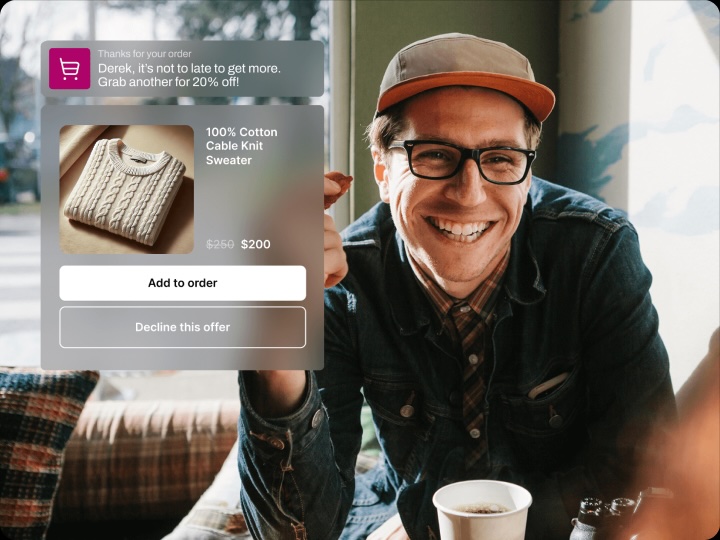
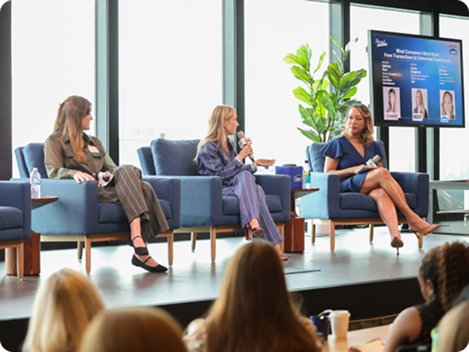
John, thank you for joining us today at Rokt Connects, series around navigating uncertainty. For those joining us today, I'd like to introduce John Gerzema. He's the CEO of the Harris Poll. Welcome. Hey, Pete. How are you? Fantastic. So, John, just to kick things off today, the Harris Poll data suggests and shows that shifting consumers' priorities in twenty twenty five. Given this, what do you believe marketers' most important trends are that they cannot afford to ignore right now? You know, Pete, I think the first most important thing is the trend around what we call crispy consumerism. Right? Consumers have propped up the global economy for the past five years throughout this period of economic volatility and inflation, and yet at the same time, they're under siege. So I think it's really important to understand from brands and marketers the mindset of today's consumer. They're more value oriented. They're also, interestingly more frustrated a little bit as they look at their pocketbooks and their relationship with business. Give an example. You know, we we have in our data forty three percent of Americans right now, feel stuck. Another twenty four percent feel like they're falling behind economically. And when we ask them, who do you blame for your situation? Well, thirty percent, they blame themselves. Thirty percent, they blame the government. But thirty nine percent, they blame brands. They bring brands and companies, and that is because of inflation, both inflation and employment. So this is something that I think marketers and businesses need to understand is that there's a volatility that's emerging in the consumer brand relationship. Interesting. And, obviously, given that every dollar that you mentioned there around inflation, increasing costs, and employment, therefore, every marketing dollar now has been scrutinized. How do you see leading brands using data to find the right target audiences and make sure they're tapping into that sent sentiment, sorry, sentiment across the board there for consumers? Yeah. You know, you just have to remember it's not just about the price of milk and eggs. Consumers are stressed in so many different ways. You know, we found in our data that ten thousand dollars is the average amount that American consumers are holding on to right now in terms of revolving credit card debt. So you have to understand that. Another interesting fact, sixty percent of millennials and Gen z are still on an allowance from their parents. So there's a lot of frustration that exists in consumerism. So, really, what brands have gotta do is they've gotta make the moment. Right? I think increasingly with these scarce marketing dollars that are being allocated, you've gotta be hyper relevant. Right? You've gotta be focused on identifying your intent consumers to get to deeper sort of relationships. But that opportunistic moment to really tap in is, I think, the thing that's really focused right now. Making the moment is about being increasingly relevant, highly personalized, highly customized. So they they make sure that your offer is really gonna land and it isn't just another thing that they're being, besieged with. Yeah. We're seeing that from some of our marketing partners in there that not only do they have to prove the marketing's work, but looking for partners who can provide that relevancy to them Yeah. And not going to more partners, but to actually fewer partners and doing more with them. So with so much noise about AI and automation out there in market, and perhaps I would be replaced by AI in interviewing based on how this is going today, which is back to the marketers. But what's actually moving the needles as it pertains to AI in order? What's moving the needle for brands facing these tighter budgets Yeah. I mean, obviously, AI in our culture is something that's, both filled with lots of promise and peril. You know, in our data, seventy five percent of Americans believe that AI is gonna disrupt their career, to your point, Pete, in some context, But there's also a lot of excitement around it. I think when it comes to brands, you can't really think about it as a blanket tool. Right? You've gotta be thinking more about how do you use AI with strategic applications. How do you use it to really, for example, maximize the spending at certain touch points? How can you sort of understand in ways that you can create more intelligent offers, Pete, as you were talking about, sort of more personally relevant offers? And that's where I think AI can really come in and deliver. Right. If you think about the shopping experience, we were very focused on that transaction moment. We understand that relevancy is key there. When we ran a survey with the Harris Poll, I think it was back in the fall, we saw that seventy percent of consumers enjoyed shopping experiences. I think we all do if we're buying the right thing and the right gift either for ourselves or others. That said, we saw the numbers rise to eighty percent for millennials and nearly eighty percent for Gen Z. Is that still true today, given the uncertainty and change since we've seen since the fall? Yeah. You know, online shopping remains sort of a constant and even welcome relief for people. I think we coined it together, Rokt Harris poll. We called it Joco. Right? Sort of this absolute sort of joy of checking out. You can call it a dopamine hit if you want, but it really gets to this place where the bar for experience just has to continue to grow. And so as you're moving your way down the funnel, you know, what are we doing to really drive those personalized, seamless, and really rewarding offers that are really connecting with people. As we get towards rounding out this conversation, a couple of final questions, which is, is there one one or two things that you think most marketers are getting wrong today when we think about the consumer behavior within the shopping environment and that shopping experience. I think there's a real big disconnect on value right now between consumers and brands. You know, we saw in our Rokt our Harris poll data that fifty five percent of consumers today actually plan to buy products with the lowest prices when they're shopping in the next few months because a lot of those economic things we just talked about. But really interesting, Pete, only five percent of retailers think that shoppers are gonna trade down. So, you know, you've got value seeking shoppers looking for maximum experience, maximum quality for their dollars. We saw in our data, our reputation data, seventy one percent of companies' reputations declined last year because they were passing along costs. They weren't driving a great product and service quality for the dollars. We gotta understand that's back to that crispy consumerism. Your consumer's looking for value, and they're looking for great quality. Thank you. I'm gonna throw in a bonus question. When we think of the consumer looking for value within a category, do we have or do you have insights into consumers actually getting out of a category completely? And if I think they're around casual dining to QSR, right, the consumers today just can't afford to go casual dining as frequently as they are, and so they're trading down into QSR. And so we're seeing cross category consumer shifts. Do you have data and insights to back that up? Yeah. Absolutely. I mean, there's a lot of that happening across sectors that's tariff influenced. Fascinating fact about tariffs, forty percent of Americans believe that the importing country is paying the tariffs. So there's a lot of potential sticker shock that's gonna come through the funnel if these tariffs are to continue. And, you know, even as of today, it looks like things are being sort of slowed down a little bit. But the point remains that consumers are very much stressed on their budgets for all the things we've been talking about. And so there's a trend now towards sort of opting out of different categories. You know, we saw in our data, forty percent of Americans are interested in opting out of economy. What that means is just spending less in certain places where they would have spent. So it's all highly personalized that we're talking about. It might be about, as you say, trading out of, you know, mid scale dining into QSR, or it might be moving out of different categories. So that's the issue right now is how are you as a marketer thinking about protecting your category and actually using this as an opportunity to to provide better value? Yeah. Thank you. I would say I'm not sure if if there's a correlation there with the thirty percent of people that blame themselves for their financial situation and those forty percent that say it's the other country paying. I think there's those two are the different ends of the spectrum Indeed. From that standpoint. One final question we have, John, is what is one idea do you think every marketer, given the uncertainty that we're seeing, needs to hear right now? Pete, this is old fashioned consumer champion. You know, the the brands that that Americans really adore are the ones that think they have their back. And the very fact that only twelve percent of corporate reputations rose last year, for me, is a massive opportunity. How do you go back to the basics about being consumer centric? Cliches are cliches because they're true and timeless. And, really, I think we've forgotten a little bit about that. Through COVID, we see Americans saying that companies are passing along their costs. They're actually not doing anything to to be in my corner. So the extent to which you can really go back to your roots of being a surprising, delighting, offering value, but being consumer centric is really the timeless opportunity right now. And there's big evergreen growth for the companies that can really focus on doing that. So when if you think about marketers, there's promotion sometimes promotional budgets and marketing budgets, media budgets are part of that. Are you essentially saying that there is a way in which to join how you're going to market with your media with promotional budgets to show you putting cost savings back into the consumer's wallet, or is it more than just that? Yeah. No. I think that's exactly it. Is how are you being transparent with your pricing? How are you potentially showing your pricing and your Rokt to the system? You know, consumers are just highly suspect right now, and that's at the point of this lack of steam toward business, which, by the way, Pete, we have not seen in our data. It's always business has always been seen as more trustworthy than politicians or the government. So this is, again, five years of global consumers facing stacked crises around the world and really amplified by the last three years over inflation. So, you know, inflation may have abated somewhat depending on the experts, but eighty percent of Americans in our data say that I don't trust experts. The metrics that matter are the metrics that are in my pocketbook and at the kitchen table. Great. Well, thank you, John. I really appreciate, you know, spending time with you today. I always learn from you when we hear. And thank you for joining Rock Connects, and I hope that for everyone listening, you have a somewhat clearer path of navigating the uncertainty in front of us. Thanks, Pete.



.jpg)