

.png)
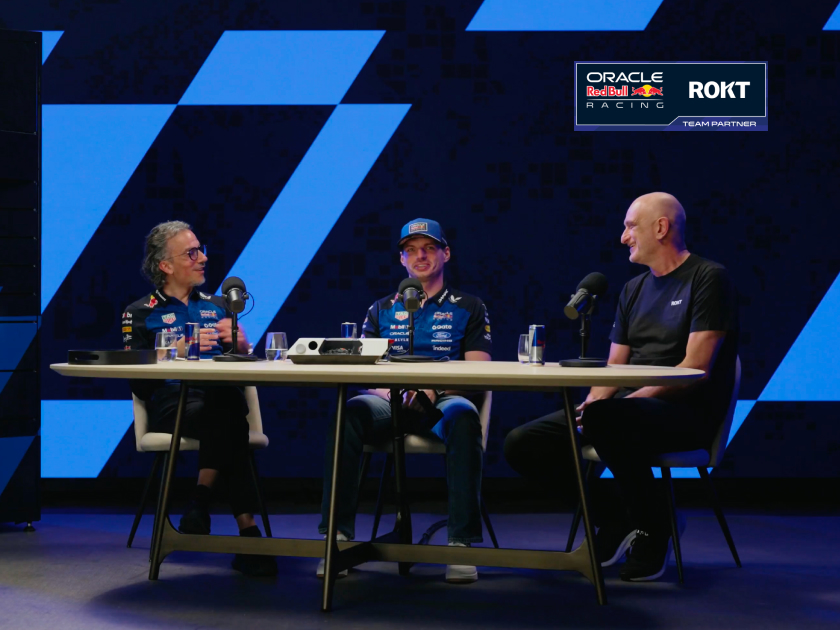
Most ad budgets are built around the click. The cart. The checkout page. And then they stop. At the EMARKETER Ad Buyer Strategies Summit in New York City, Sophie Donoghue, SVP of Client Success at Rokt, joined EMARKETER's Suzy Davidkhanian for a fireside discussion that challenged that assumption and made the case for what comes next.
The Transaction Moment is not the finish line
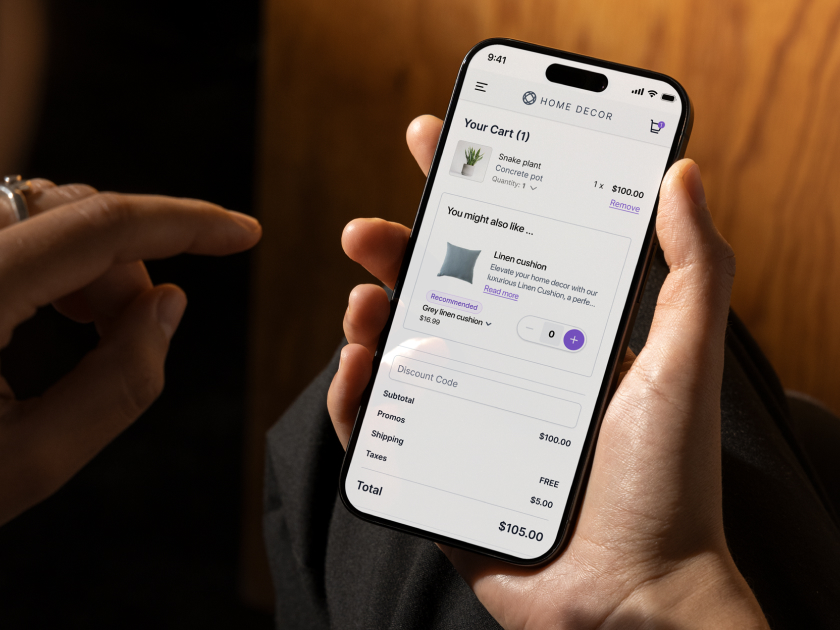
When a customer is actively completing a purchase online, they are at peak intent. They have their credit card out. They have made a decision. But according to Sophie, that moment, what Rokt calls the Transaction Moment™, is consistently overlooked by marketers who treat it as a period rather than an opening.
"The post-purchase page is something partners don't even think about," Sophie told the audience. "They're like, 'We've got the order we want.'"
That gap is the opportunity. The Transaction Moment spans the full selection-to-confirmation window, from cart through payment to the post-purchase page, and it is one of the few places online where a customer is both highly attentive and genuinely open to what comes next. Rokt's network now processes 10 billion transactions annually across verticals including retail, travel, food delivery, ticketing, and rideshare, giving brands access to this window at significant scale.
A new pillar in performance marketing
Sophie was direct about where Rokt fits, and where it does not. Search, social, and affiliate are well-established channels. Rokt is not a variation on any of them. The better frame is a fourth bucket: shopping, and specifically the Transactional Moment within it.
"Think of us as a performance marketing channel that's measurable and incremental," she said. "There's never a clearer sign that someone is open to a new offer than when they're literally buying something."
For performance marketers, that distinction matters. Rokt consistently delivers against CPA, ROAS, and LTV goals, but what brands keep discovering is that the customers they find are net new, people their existing channels never reached. The conversation that starts with "can you hit our goal" quickly becomes "how do we scale."
Incrementality is the real story
The session kept returning to one word: incremental. And with good reason. Sophie described the pattern that plays out with brand after brand: they come in asking whether the channel works, then realize the customers arriving through Rokt are ones they had not found anywhere else.
"We play a top-of-funnel role in the sense that the customer wasn't necessarily looking for that introduction to that brand," Sophie explained, "but with bottom-of-the-funnel performance outcomes."
This dual role, discovery with conversion intent, is what separates the Transaction Moment from passive impression-based channels. The customer is already in a buying mindset. They have demonstrated intent with their wallet, not just their cursor.
Sophie expanded on this thinking in a piece she authored for EMARKETER shortly after the summit. In it, she makes the case that transaction environments are powered by deterministic, real-time customer behavior rather than the probabilistic targeting that underlies most open web and social channels. That signal quality is what makes incrementality in this context real and measurable, not assumed. As she wrote, efficiency alone is no longer enough: brands are being asked to prove that media investments drive outcomes that would not have happened anyway. The Transaction Moment, with its closed-loop visibility into confirmed purchase behavior, is where that proof becomes possible.
One example that landed in the room that day: a satellite radio brand saw strong incremental results running within a quick-service restaurant's post-purchase environment. The reason, which only became obvious on reflection, was that customers at drive-through QSRs are, by definition, in their cars. That insight opened an entirely new targeting logic for mobility-adjacent brands, from car insurance to gas offers, built entirely from behavioral context rather than assumed demographics.
Relevance over volume
Scale without relevance is noise. Sophie was clear that Rokt's role is to act as a trusted intermediary for three parties at once: the partner site, the advertiser, and the customer. That means the system draws on first-party data from both sides of the transaction to assess whether an offer is worth showing at all.
Does the customer already have the product? What are they buying right now? What time of day is it? Where are they? For high-frequency partners with customers who transact multiple times a week, the right answer is sometimes to show nothing. Protecting the customer's attention is what makes the next impression count.
"The best thing to show is sometimes nothing at all," Sophie said.
Personalization adds another layer, but as Sophie noted in her EMARKETER piece, what actually resonates is contextual relevance rather than audience matching alone. A travel confirmation page may present an opening for a complementary financial service. A retail purchase could unlock a relevant subscription or loyalty offer. The value comes from timing and context. Consumers increasingly tune out experiences that feel overly targeted or disruptive, and the Transaction Moment works precisely because the message fits what a customer is actively doing.
What this means for ad buyers
The session closed with a direct message for brands still sitting on the sidelines: the infrastructure already exists. Rokt has built the network across 10 billion annual transactions. Brands integrate once and get access to the full breadth of it, without individual deals with ticketing platforms, apparel retailers, department stores, or anyone else.
What separates brands that scale quickly from those that do not is data quality and signal strength. The more robust the integration, the faster Rokt's AI can identify the right customers. Increasingly, brands are passing predicted LTV as an early signal, recognizing that a seven-day window needs a faster feedback loop than traditional conversion data provides.
The channel is measurable, incremental, and available at the moment when buyer intent is highest. For brands still treating checkout as the end of the customer journey, the question worth asking is: what are you leaving behind?
Read Sophie's full EMARKETER piece, "Why the Transaction Moment Drives Incrementality," for a deeper look at the signal quality and measurement case behind the channel.