


.png)
Customer reward programs have been part of the ecommerce landscape for years. What has changed is the expectation around proof. Partners want to know that a reward program is driving incremental behavior, not just reporting return visits. Shopper Rewards was built around that expectation.
Shopper Rewards pairs a relevant offer with a partner-branded reward across the Transaction Moment™, layering directly onto existing Rokt Thanks and Rokt Pay+ placements. The reward can be a gift card, a discount, a free item, or an enrollment incentive. What stays consistent is the outcome: shoppers get something of real value, partners earn more from placements they already have, and advertisers reach high-intent audiences where engagement is strongest..
How it works
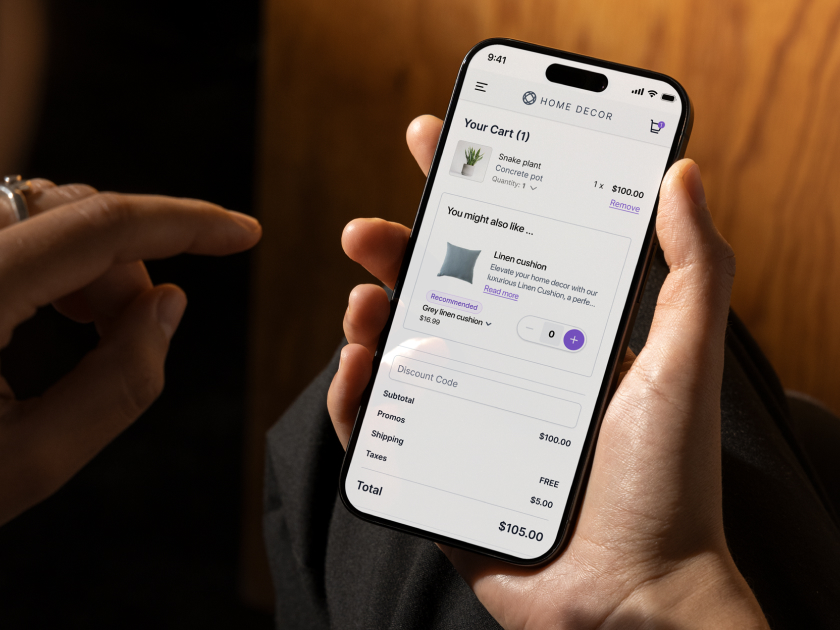
At its simplest: a shopper takes an action during their purchase journey, and they receive a reward branded to the partner. The reward type, timing, and placement vary depending on the partner's goal. Here is an example of what that experience looks like for a shopper.
Shopper Rewards can appear on the payment page or the confirmation page, and it can serve different business goals depending on where it lands and how the partner uses it.
Reward experiences across the Transaction Moment
Partners across retail, entertainment, and QSR are using Shopper Rewards to drive different outcomes depending on where the reward appears and what the business goal is.
- Rewards on Pay+ give shoppers an incentive to complete their purchase. A partner-branded gift card appears on the payment page, redeemable against the shopper's current transaction. The reward is immediate: the shopper gets something of value right now, in the moment they are already committed to buying. Because the reward is built into a cohesive customer experience, it does not disrupt the checkout journey. It also opens up new advertiser categories that would not otherwise have a path onto the payment page. Retailers in early testing see a 10-15% lift in RPPT, or revenue per payment page transaction (a measure of how much the partner earns per transaction where a Rokt placement is rendered on the payment page), with the reward type driving more than 10% of total payment page revenue.
- Rewards on Thanks give shoppers a reason to come back. Pairing the gift card with the offer also makes the offer itself more appealing, incentivizing shoppers to convert. For the partner, it is incremental value per transaction on a placement that is already live. Partners across entertainment and retail see 5-10% lift in value per transaction at the page level, and up to 27% on matched transactions. More than half of shoppers open the gift card email.
Rewards that drive specific behaviors go a step further. Partners target their own shoppers with a specific action: sign up for a loyalty program, download the app, make a qualifying purchase from a specific brand or above a specific basket size. Partners running these campaigns across QSR see conversion rates between 16% and 53% on loyalty and engagement actions, with referral rates consistently around 25%. Rewards program members across these verticals spend roughly $100 more per year and return two to 11 times more frequently than non-members.
Each of these solves a different problem, but all are in service of the same goal: increasing the value of every transaction. Knowing which problem you are solving shapes which approach fits, how you measure it, and what you can credibly claim.
Why measurement matters as much as the mechanic
Across the industry, reward programs report repeat purchase rates and return visit numbers that look good in a deck. Few explain how those numbers were calculated, what the baseline was before the program existed, or whether the customers who returned would have come back anyway.
That gap matters. A repeat purchase rate only means something if you can prove the purchases would not have happened without the incentive. Eli Chamberlin, Rokt's Director of Product, wrote about this recently in Retail Dive: the incentive and the measurement are both part of the product. Most programs only build one half.
Rokt built Shopper Rewards with both from the start. Outcomes are measured at the point of transaction through direct integration with the partner's data, not only through proxy metrics like gift card redemption rates or email opens. The behavior a partner wants to influence is defined before launch. Results are measured against a control group. When a partner sees a lift in repeat purchases from a targeted incentive campaign, that number represents directly attributable behavior change, not an assumption about what drove it.
Get started
Shopper Rewards layers onto existing placements with no additional development work. For partners evaluating reward and loyalty programs, the question worth asking any vendor is straightforward: can you prove the program drove incremental behavior, or are you reporting return visits.

%20(1).webp)
.png)