

%20(1).png)
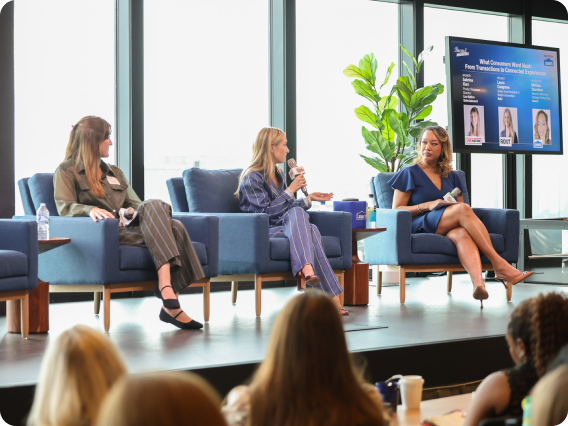
At Cannes Lions, Rokt's Elizabeth Buchanan joined Target's Michelle Mesenburg and Instacart's Laura Jones at the Female Quotient Beach for a panel moderated by Shelley Zalis, CEO of The Female Quotient, on what shopping actually feels like when it works.
Shelley Zalis opened with a question about moments that surprised or delighted: not best practices, not frameworks, just the last time shopping felt good. Everyone’s answers kept returning to the same thing: the absence of friction.
Joy shows up when the experience is seamless
Elizabeth described two versions of a good shopping experience: finding something you actually want to buy, and getting through the process without anything slowing you down. "In digital these days, you're constantly trying to get through the thing that popped up or the thing that gets in the way," she said. "When a brand remembers what you care about and the kind of shopping experience you want to have, that's when it's joyful."
Laura's example was more specific. Her eight-year-old resists protein, which makes breakfast a recurring problem. She tested Instacart's cart assistant while it was still in beta, asked for high-protein breakfast ideas for a child, and found protein waffles. "It was both a functional need and an emotional need," she said. "That ability to really meet someone on both of those levels and solve a problem in a way that feels seamless and delightful is ultimately what customers respond to."
Michelle focused on recognition. The best shopping experiences, she argued, happen when a brand meets you where you are in that moment, not where it assumes you should be.
Which raised the obvious next question: if joy is what shoppers feel in the moment, what makes them come back?
Where loyalty actually comes from
Elizabeth offered a piece of etymology that reframed the conversation: the word loyalty comes from the Latin fidelis, a legal agreement. The French turned it into something emotional, the kind of commitment driven by genuine care. Rokt sits across billions of transactions. That scale reveals that "understanding the consumer holistically means we can help each of those brands remember to think about their consumers as whole people, not just individuals in that moment shopping for a single item."
Laura's version of loyalty shows up most clearly when things go wrong. Groceries are personal enough that a substitution can feel like a broken promise. Instacart launched a preference picker this year that lets shoppers specify ripeness levels for produce. The feature came from more than 20 million hand-typed shopper notes about bananas. "We're asking people to do too much work," Laura said. "If our promise is to let you take care of life, then we need to do better." The implication being: brands that actually fix the small stuff are the ones that earn the next shop.
For Michelle, that same logic plays out across 400,000 team members and 2,000 stores. Loyalty starts with the people in the building. "Our team members are right at the front," she said. "It sounds really simple, but greet somebody, help them if you can, and thank them. Wherever somebody is at when they walk into the store, they feel seen."
What AI is actually doing in these businesses
None of the three brands are using AI to be clever. They're using it to reduce friction. And in each case, the constraint is the same: the technology only works if it stays subordinate to the human experience around it.
Laura described the tension most directly. Instacart has been partnering with chefs and creators to ensure its recommendations are informed by genuine human taste, not just pattern-matching. "We grew up eating human food, and that's part of what makes us human," she said. The in-app cart assistant is built around making the experience easier, not more impressive.
Michelle said Target is running AI on the devices its team members carry in stores, handling repetitive tasks so people can spend more time on actual customer interactions. The goal is to protect the human moment..
For Rokt, the shift has been fundamental. The platform was rebuilt from scratch earlier this year, resulting in Rokt Brain V4, which brings real-time relevance to every Transaction Moment at scale. "The identity graph is mind-blowing," Elizabeth said. "The amount of things we can now know about a customer to be able to be relevant every time you see them." The deeper the understanding of the customer, the more every interaction earns its place.
The clearest thread across the afternoon wasn't any one brand's story. Laura put it in terms of effort. Michelle put it in terms of presence. Elizabeth put it in terms of relevance. Different scales, different surfaces, same answer: joy is what happens when nothing gets in the way.